Extension Today
News from and about the 1890 Land-Grant Extension SystemMessage from the Chair

Dr. Raymon Shange, 1890 Extension Administrator, Tuskegee University
Shaping tomorrow begins with investing in today’s young people, and Cooperative Extension is at the heart of that work.
Across the 1890 region, Extension professionals are creating pathways for young people to discover their potential, build leadership skills and envision futures rooted in purpose and possibility. Through 4‑H programs, STEM initiatives, workforce readiness efforts and community‑based learning, Extension continues to provide young people with hands‑on experiences that spark curiosity, confidence and civic engagement. This issue of AEA Extension Today highlights how youth development in action is not simply a program area but a powerful strategy for building resilient communities and a prepared next generation.
From classrooms and clubs to camps and community projects, Extension’s youth development efforts are shaping tomorrow’s leaders by meeting young people where they are and equipping them with skills for life. Cheers to all of the educators, volunteers and partners who continue to shape the future of our communities through intentional mentorship. Let us not forget that when young people are empowered to learn, lead and serve, the impact extends far beyond the individual, strengthening families, enriching communities and ensuring a brighter future for all.
I would like to leave you with a quote from Nelson Mandela: “Our children are the rock on which our future will be built, our greatest asset as a nation. They will be the leaders of our country, the creators of our national wealth, those who care for and protect our people.”
Teens as teachers
By Dr. Angela Williams
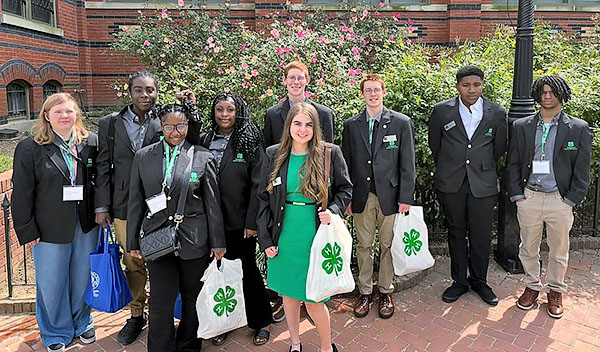
What happens when young people move beyond participation and begin leading the learning? That vision is becoming a reality through Teens as Teachers, a new initiative from Alabama 4-H at Alabama A&M University. Funded by the National 4-H Council, this initiative develops youth leadership and deepens the impact of 4-H programming across communities. At the heart of the program are teen ambassadors who serve as facilitators, mentors and educators, actively shaping people’s experiences.
How does it work?
Middle and high school-aged youths step into leadership roles to guide younger participants through hands-on lessons, interactive discussions and real-world skill-building activities. With support from the 4-H specialist and Extension agents, 4-H ambassadors model and practice essential character traits. As leaders, they identify and address real-world issues impacting their peers and neighborhoods.
In addition, these teens learn how to lead with accountability, make sound decisions and serve as positive role models for younger youths. As a result, they bring authenticity, trust and purpose into every interaction. Younger youths benefit from engaging, peer-led learning environments that foster connection and inspiration. Teen leaders develop critical life skills such as communication, problem-solving, adaptability and leadership that prepare them for success in college, careers and beyond.
Learning circles
A key component incorporates quarterly learning circles, where teen ambassadors from other Extension programs come together to reflect, grow and strengthen their leadership practice. These learning circles provide a structured space for collaboration, peer feedback and skill-building, allowing teens to share experiences, discuss challenges and refine their approach as educators and leaders. Teens are positioned to lead, serve and create change right now.
Young people step into science through Alcorn’s 4-H CSI Academy
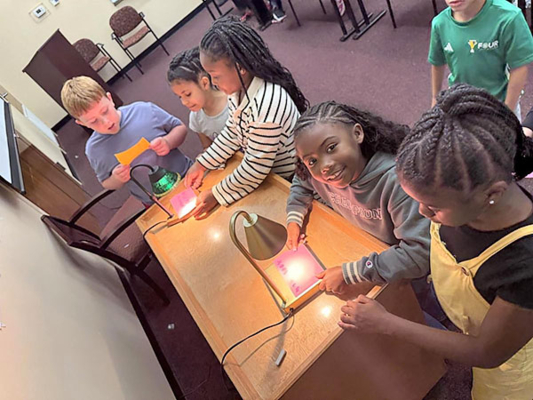
A missing birthday candle set the stage for something much bigger at Alcorn State University (ASU), where youths are stepping into the role of investigators and discovering science in action through the 4-H CSI Academy.
What begins as a fictional mystery quickly unfolds into a hands-on learning experience that challenges students to think critically, analyze evidence and work collaboratively. Developed by ASU Extension, the 4-H CSI Academy: The Case of the Missing Candle uses forensic science as a gateway to engage youths in science, technology, engineering, agriculture and mathematics (STEAM) in a way that feels both real and relevant.
Participants are introduced to the case through a letter from a young girl seeking help to solve the disappearance of her mother’s birthday gift. From there, students take ownership of the investigation — collecting clues, testing materials and building suspect profiles as they work toward solving the case.
Along the way, young people explore scientific concepts through interactive activities. They analyze fingerprint patterns, conduct basic chemical tests to identify unknown substances, decode hidden messages and examine footprints to determine movement and identity. In one of the program’s most engaging exercises, students extract DNA from strawberries, offering a hands-on introduction to how biological evidence is used in real investigations.
The experience goes beyond learning scientific techniques. As students work in teams to interpret evidence and present their findings, they strengthen communication skills, practice collaboration and gain confidence in their ability to solve complex problems.
4-H program empowers young men to lead
By Brian Walker, CSU 4-H Program Leader
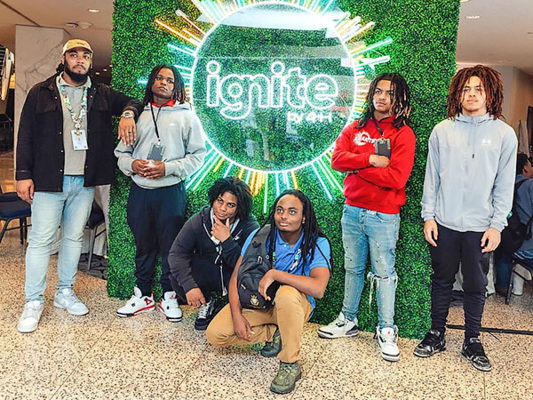
Young men in the Lincoln Heights 4‑H program in suburban Cincinnati, Ohio, are redefining what it means to grow, lead and prepare for the future. Through a partnership with Central State University’s 4-H program and the Heights Movement, a group of young men has been engaged in a consistent, structured youth development program that blends mentorship, leadership training and real-world exposure.
The young men meet monthly through specially designed initiatives such as the Congressional Youth Council and Men of M.O.O.R.E., as well as other 4-H leadership programs. These participants take part in hands-on sessions that focus on financial literacy, agriculture, civic engagement, workforce readiness and mental health awareness. The young men are challenged to think critically, communicate effectively and support one another as they navigate their personal and academic journeys.
A key milestone in their development was a recent trip to Washington, D.C., to attend the 2026 Ignite by 4-H. This experience served as both a reward and an extension of their learning. Many had never been to the nation’s capital. This sparked conversations on how their work within their communities can link up to work on a national level.
The impact was not only felt by the students, but the parents also shared positive feedback. A parent expressed that her two sons told her this was a life-changing experience like no other.
This is weird…when are you coming back?
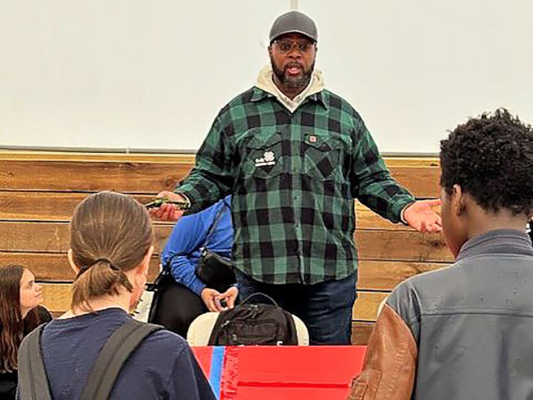
Young people of every generation are considered “different” by the previous generations (eh hem…older folks). No matter how hard we work at it, this is likely to continue in perpetuity. This chasm serves to reiterate the need for youths to learn skills and gain knowledge while engaging with caring adults. Enter Youth Program Educator Dean O. Purnell (and a whole cast of other compassionate and smart 4-H educators, leaders and volunteers).
The first day Purnell walked into a local juvenile detention facility to engage residents in LEGO robotics, he was met with odd stares and questionable commentary. After a perfunctory introduction, he began to demonstrate the possibilities of tasks and operations that could be programmed into the small robots they were using.
“Can I try?” asked one brave student (others soon followed). Soon, many, though not all, were engaged in figuring out movements, directions, problem-solving and even some small math calculations.
During their time learning to program robots using computer coding, students were able to ask some very pointed life questions of Purnell. The discussion included topics such as self-driving cars, HVAC technician training, small business development and financial management. Each student’s questions were listened to and valued by Purnell. A small gesture that showed a large amount of respect.
The conversations and subject matter place each student in the center of the conversation to say, “This is something that you can do.” Before long, the allotted time for this session was coming to an end. “So, when are you coming back?” was the question that bounced all over the room. “Soon,” Purnell replied. “Soon!”
Hands to larger service: Kodi Hayes in action
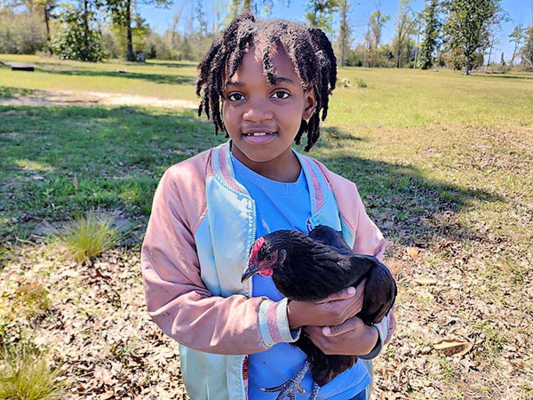
What began as a simple desire to help others has grown into a powerful example of youth development in action. Kodi Hayes, a dedicated Junior 4-H member, has been nominated by her school for the Leon County School District Youth Volunteer of the Year. She didn’t begin volunteering for recognition — it simply “felt like a good idea.” Today, that mindset is shaping her into a leader of tomorrow.
A 4-H member for six years, Kodi has grown from a Cloverbud into an active participant in the Insect ID and Arts and Crafts clubs. Through these experiences, she has developed curiosity, creativity and a strong sense of responsibility.
Kodi’s impact is felt both in and beyond the classroom. At school, she volunteers in The Den, an on-campus food pantry and clothing closet, where she organizes supplies and supports fellow students with care and dignity. On weekends, she continues her service at The Farm, tending to animals and stepping in wherever help is needed.
“It feels great to help,” Kodi shares — a simple yet powerful reflection of the 4-H pledge to use one’s hands for larger service.
Through 4-H, Kodi has gained essential life skills in teamwork, organization and time management. More importantly, she is demonstrating how young people, when given the opportunity, can lead with compassion and purpose — truly shaping tomorrow through service today.
FVSU 4‑H shapes tomorrow's leaders like Ja’Mari Little
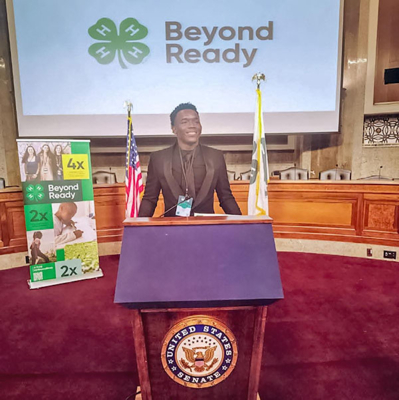
When Woodie Hughes Jr., assistant Extension administrator, 4-H program leader at Fort Valley State University (FVSU), reflects on how FVSU is shaping tomorrow’s young people today, he says he feels both blessed and humbled.
In his role, Hughes helps prepare young people across Georgia from rural and urban communities for success in college and careers by building skills in leadership and life readiness to become 4‑H Beyond Ready.
Ja’Mari Little, an FVSU 4-H member in Fulton County, is a good example of that impact, said Hughes. When asked how 4-H has influenced him, Little described the program as transformative.
“Over my past four years as a member of the FVSU 4-H program, 4-H has played a transformative role in helping me define my passions and develop the skills necessary to create meaningful change in the world," Little said. "Through my involvement, I discovered that my true purpose is to be a changemaker – someone who uses innovation, leadership and service to address real-world challenges in agriculture and environmental sustainability."
Little added that 4-H not only helped him identify his interests but also equipped him with the leadership skills, confidence and determination to pursue his goals.
"It has prepared me to make a lasting impact by combining agriculture, technology and service to better the world for future generations," he said.
Little believes that FVSU's 4-H program is shaping tomorrow’s young people by showing them how one idea, when driven by purpose and action, can grow into something that creates lasting impact.
Student's question grows into hands-on learning at Tates Creek Middle School
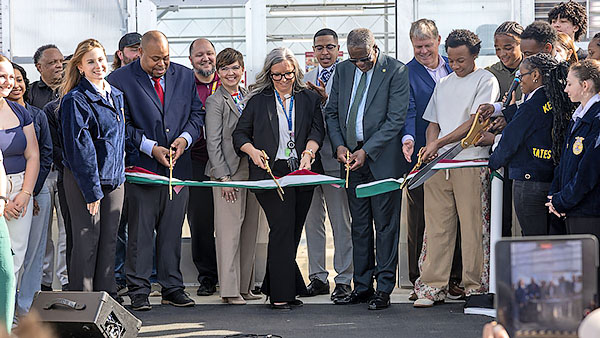
At Tates Creek Middle School in Lexington, a student's question helped spark something much bigger.
When Avery Adams asked, “Can we get some gardens? Like a greenhouse?” the idea eventually grew into a new greenhouse and land lab that now gives students hands-on experience in agriculture, food systems and science. On April 2, Fayette County Public Schools, Kentucky State University and Farm Credit Mid-America celebrated the project’s opening.
For Kentucky State, the greenhouse reflects youth development in action through the work of an 1890 Land-grant University. It is also a strong example of Cooperative Extension’s role in helping connect education, community partnerships and practical learning that prepares young people for the future.
Students at Tates Creek Middle School are already using the space to explore hydroponics, aquaponics and other applied growing systems. After the ribbon cutting, current students led demonstrations showing the work already underway across the greenhouse and land lab.
The project also reaches beyond the school itself. In addition to supporting agricultural literacy and hands-on student learning, the site is expected to help expand access to healthy, locally grown food and create opportunities for community education around agriculture and nutrition.
That longer arc matters. Adams, now a sophomore at Tates Creek High and Locust Trace AgriScience Center, returned for the ribbon cutting and represents the kind of pipeline Kentucky State is helping cultivate — one that begins with curiosity, grows through experience and continues through education, leadership and real-world opportunity.
Learning by doing: Langston University Cooperative Extension inspires next generation
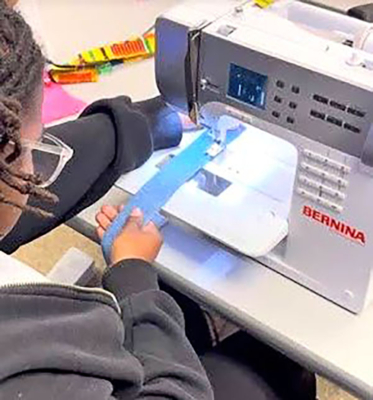
Langston University Cooperative Extension and Outreach Program extends learning far beyond the classroom through hands-on experiences that inspire confidence, curiosity and connection.
Across the Tulsa Dream Center North and West campuses of Tulsa, Oklahoma, 4-H SPIN (special interest) clubs are bringing youth development to life. Through engaging, skill-based activities, students are discovering new interests while building practical abilities that prepare them for the future.
In animal science sessions, young people explored the life cycle of a chicken and learned the basics of caring for small livestock. STEM activities introduced renewable energy concepts, where participants designed and built solar-powered machines. In the Cricut STEM Lab, creativity met technology as students produced hands-on design projects, while the Sewing Club offered foundational skills through beginner-friendly creations.
Healthy living sessions focused on preparing meals from scratch, helping young people understand nutrition and wellness. Drone technology activities further expanded learning, introducing safe operation practices and real-world applications. The program culminated in a youth showcase, where participants confidently presented their work to families and community members while demonstrating not only what they learned, but who they are becoming.
“When young people are allowed to learn by doing, they begin to see what’s possible for their future," said Marquisha Thomas, 4-H educator at Langston University.
Through collaborative efforts of Extension educators and community partners, Langston University Extension continues to advance its land-grant mission, equipping young people with the tools, knowledge and confidence to lead and thrive. For more information, view this video.
Lincoln University addresses needs, uplifts leaders with youth development programming

Today’s students are tomorrow’s leaders, and Lincoln University is dedicated to supporting young people on their journey. Through 4-H and youth development programming, Lincoln helps Missouri’s youths face modern challenges, turning problems into solutions and weaknesses into strengths.
Dr. Adrian Hendricks, head of LUCE’s 4-H & Positive Youth Development Program, says Lincoln is mobilizing youth development in Missouri, bringing programming up to speed with the modern world.
“Lincoln University 4-H and Youth Development is driving innovation through the merging of new programs with new technologies,” Hendricks said. “That’s one of the goals of our programming efforts – inspiring the next generation to build new skills at the intersection of technology, leadership, creativity and innovation.”
LUCE offers a variety of youth programming covering several areas, including college readiness, creative arts, ACT/SAT prep, career readiness, leadership and agriculture — all designed to address real issues facing Missouri youths/
For example, Hendricks said high school graduation rates decreased from 91.7% in 2019 to 91.3% in 2023, according to Missouri Kids Count data. While not a drastic change, the decrease demonstrates the need for programs offering academic assistance to Missouri students.
Similarly, as math and science scores improve among fourth-eighth-grade students, LUCE provides continued academic enrichment with STEAM and STEM support in its programs statewide.
“Our approach empowers young minds with the tools and skills necessary to make an impact. This is how we solve local issues, whether that’s health disparity, mental health, academic challenges, job placement, all those things,” Hendricks said.
Internship program offers insight into Extension, sense of community
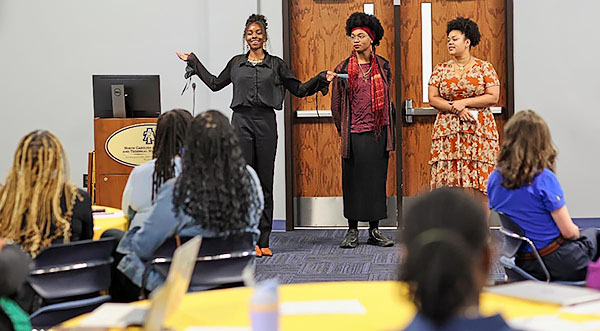
As a summer intern working at the Guilford County office of Cooperative Extension at North Carolina A&T, college student Camryn Ross found herself on the other end of education — teaching.
“This was an experience where instead of learning only, I was learning and teaching,” Ross said of the internship, which included working at the Greensboro District 4-H Junior Dairy Show.
“I was learning how to do cattle shows, and the next day, I’m teaching the children. I just had so much fun!” said Ross, a sophomore at the University of North Carolina — Charlotte.
Ross and 17 other college interns received hands-on training at Extension offices across the state last summer as part of the Student Internship Program with Cooperative Extension. Another group of interns is slated to come aboard this summer, and there is a waiting list.
“Learning comes in many forms,” said coordinator Shamica Battle, Ed.D., eastern regional director at N.C. A&T Cooperative Extension. “It is my goal to help students deepen their understanding while providing an environment that supports meaningful learning experiences.”
The program not only informs students of their career options, but also provides them with a sense of community, purpose, ambition and a genuine appreciation for the work Extension does each day, Battle said. She vividly recalls her own internship experiences as an undergraduate and the value they added to her professional growth.
"That is the same lasting impact I hope our program provides to the students we serve,” Battle said.
Beyond Ready
By Taylor Hendrix, PVAMU Extension Communication Specialist
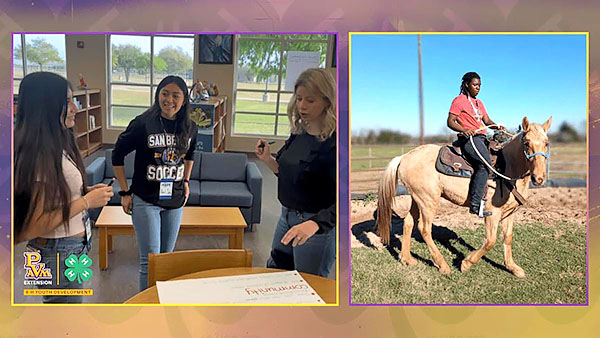
Preparation for the future takes more than grades; it requires clarity, confidence and direction. Prairie View A&M University Extension’s 4-H Youth Development program is helping students become Beyond Ready through intentional college and career readiness programming that encourages young people to reflect on who they are and where they are headed.
For senior Abril Soto, participating in a 4-H college and career readiness Operation U workshop series with Dr. Robert C.K. Harper of The HOPE Initiative was transformative.
“It helped me understand myself better,” she shared. She learned the importance of goal setting, professional communication and networking. “Your network is your net worth." She began attending conferences, connecting with mentors and seeking opportunities rather than waiting for them to come. Now preparing to transfer to Texas A&M University – Kingsville to pursue engineering, she credits 4-H with helping her set clear goals and take initiative in shaping her future.
Abigail Traylor’s journey reflects a different but equally powerful path. Raised around agriculture and horses, 4-H strengthened her passion with discipline and leadership. Working alongside her sister, she developed confidence, resilience and strong problem-solving skills. Her dedication earned her a $1,500 scholarship after placing second at the Texas State 4-H Horse Show. She is also completing dual credit coursework and is on track to graduate from high school with an associate degree in agriculture before pursuing a degree in kinesiology.
Together, these young leaders embody the Beyond Ready mission — equipped not only for college but for life.
Zy’Keria Aaron secures $10,000 to expand youth public speaking initiative
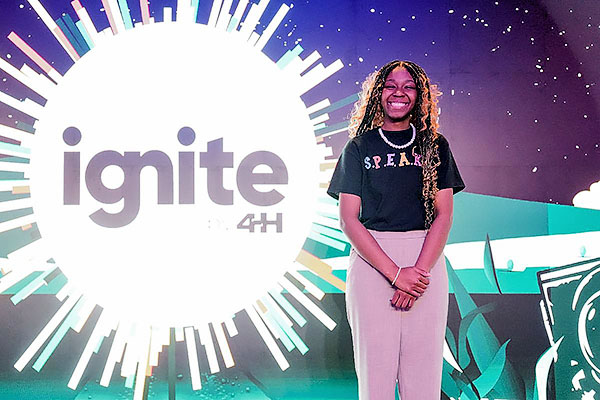
South Carolina State 1890 Extension proudly recognizes 4-H’er Zy’Keria Aaron of Dillon, South Carolina, as the 2026 recipient of the Ignite by 4-H Lead to Change grant. The Lead to Change initiative, led by the National 4-H Council, supports young people in developing community-based projects across agriculture, civic engagement, healthy living, STEM and leadership. The program empowers participants to identify community needs and create solutions while building confidence, collaboration and problem-solving skills.
Aaron received the round three Sustainability Grant, earning an additional $5,000 to expand her project, S.P.E.A.K., a public speaking program designed to help young people build confidence and overcome fear. With this award, she has secured a total of $10,000 to grow her initiative and expand its impact.
“4-H has empowered me to explore [S.P.E.A.K.] by being a safe space for so many open-minded people with great ideas and spectacular contributions,” Aaron said. “All of our ideas were so important, and I feel like that’s a huge benefit of being a part of 4-H.”
Aaron presented her project before more than 1,800 4-H’ers at the Ignite by 4-H Conference in Washington, D.C., on March 25, receiving 50% of the audience votes.
“Zy’Keria’s work with S.P.E.A.K. reflects the power of youth-led innovation and 4-H’s impact in building confident leaders,” said Demier Richardson-Sanders, state program leader for 4-H youth development. “As S.P.E.A.K. continues to grow, it will expand through summer camps, workshops, field trips and confidence-building activities that equip young people with effective communication and leadership skills.
Hip Hop to Gen Z Camp provides young people with real-world STEAM experiences
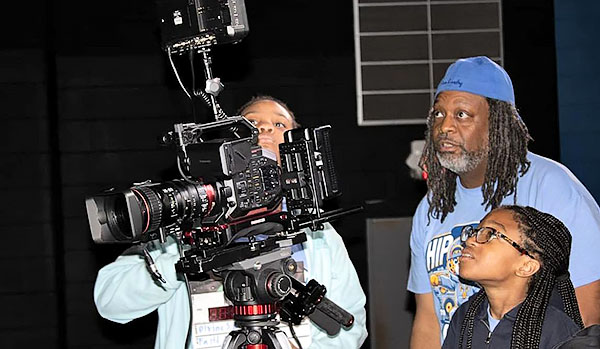
By Dr. Raquel Ayles
The Southern University Ag Center's 4-H Youth Development Hip Hop to Gen Z Camp continues to play an important role in preparing young people through hands-on learning and real-world experiences. Now in its third year, the two-week program supports 35 students annually who have a strong interest in music, performance and production.
Designed with a STEAM focus, the camp integrates science, technology, engineering, arts and mathematics in ways that help students understand how these areas connect within today’s workforce. Students participate in project-based learning experiences that introduce them to music production, digital media, performance techniques and storytelling.
Through these activities, participants gain a clearer understanding of how the arts intersect with technology and the expanding digital and entertainment industries. The program also emphasizes the development of essential skills such as communication, teamwork, problem-solving and discipline, all of which are critical for academic success and future career readiness.
The camp further explores the origins of hip hop, highlighting music, movement and storytelling as meaningful forms of expression and communication. Through this foundation, students are encouraged to develop their voice, build confidence and take pride in their work.
Feedback collected through student surveys indicates a highly positive experience. Participants reported enjoying the opportunity to learn new skills, collaborate with peers and explore areas they had not previously considered. Many students also noted increased confidence and a stronger interest in pursuing opportunities related to music, media and production.
This program reflects a thoughtful and intentional approach to youth development. Students leave with a clearer sense of direction, strengthened skills, and the confidence to continue pursuing their goals.
Grad student leader guides MLK Day of Service tree planting
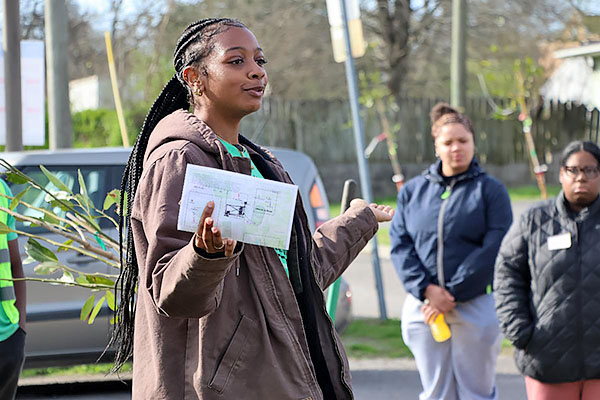
By Charlie Morrison
At Tennessee State University (TSU), youth development often takes root through hands-on experiences that connect learning, leadership and service. That spirit was on full display during the recent MLK Day of Service tree-planting event, where graduate student Kaylin Hughes helped lead an effort that brought students together around a shared commitment to community impact and environmental stewardship.
More than a service project, the event offered a meaningful example of how young leaders grow through action. By participating in the planting of new trees, students engaged in work that strengthened their understanding of environmental responsibility while contributing something lasting to the campus landscape. The experience reflected the values at the heart of youth development by encouraging teamwork, civic engagement and practical application of knowledge outside the classroom.
Hughes’ leadership also demonstrated the important role mentorship and peer example play in shaping tomorrow’s leaders. As students worked side by side, they were not only improving green spaces but also building confidence, awareness and a deeper sense of purpose. These moments matter because they help young people see how their skills and education can be used in service to others.
For TSU Extension and the College of Agriculture, opportunities like this represent youth development in action. They show how service can become a pathway to growth and how students can be empowered to lead with both compassion and knowledge. By investing in experiences that combine education with community engagement, TSU continues to help shape a generation prepared to make a difference.
EXERT 4-H Camp empowers Alabama youths through leadership, innovation, outdoor adventure
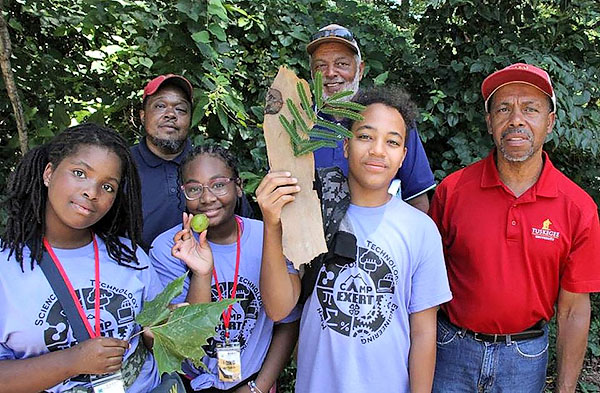
Sixteen youth campers and six interns gathered at Camp Chandler in Wetumpka, Alabama, for the annual EXERT (Extension, Education and Research Track) 4-H Camp, hosted by Tuskegee University Cooperative Extension.
This unique, week-long residential experience focused on building leadership, life skills and career readiness for young people from Alabama’s Black Belt counties. EXERT 4-H campers participate in hands-on workshops in areas such as agriculture, forestry, drone technology, artificial intelligence, nutrition, financial literacy, mental health and entrepreneurship.
In addition to classroom-style learning, the camp emphasized experiential activities. Campers participated in nature hikes to identify native plants, learned how to fly drones with AI-follow technology, and prepared healthy snacks in a nutrition and culinary arts workshop, while also extracting honey during a pollinator and beekeeping session. A business pitch competition helped participants explore entrepreneurship and public speaking.
Creative sessions, such as tie-dye T-shirt making, collage art and bracelet-making, allowed campers to explore art as a tool for mental wellness. Outdoor recreational activities included zip-lining, banana boat riding, swimming, rifle range practice, horseback riding, canoeing, axe-throwing and more. A field trip to the Montgomery Zoo introduced campers to exotic and local animal species, rounding out a week full of discovery and fun.
EXERT 4-H Camp also included daily journaling and guided reflection activities that encouraged campers to explore their dreams, strengths and personal growth. There were team-building activities such as marshmallow tower construction, a Blind Jedi game and a corn hole tournament, which helped campers build trust and teamwork.
Food and Nutrition Entrepreneurship Camp inspires Arkansas high school students
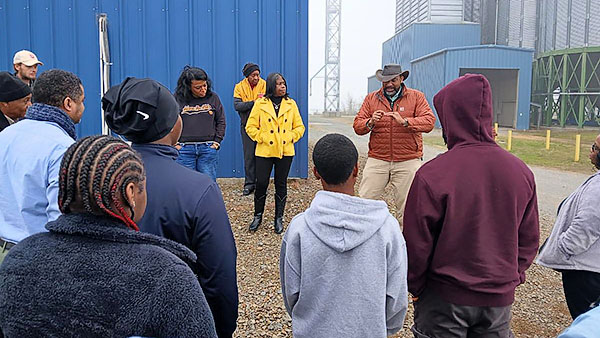
A two-day Food and Nutrition Entrepreneurship Camp at the University of Arkansas at Pine Bluff (UAPB) gave Arkansas high school students immersive, hands-on exposure to careers spanning agriculture, food systems, nutrition and business. Hosted by UAPB’s School of Agriculture, Fisheries and Human Sciences, in partnership with the National Black Growers Council, the event blended agricultural economics, nutrition education, artificial intelligence technology and entrepreneurship for students from Marvel and Pine Bluff, Arkansas.
On the first day, participants explored the economics of agriculture and its connections to health, technology and entrepreneurial opportunity. Welcome remarks were delivered by UAPB leaders and staff, followed by a presentation from a local family medicine doctor on the benefits of eating locally grown, nutrient-dense foods and the relationship between food choices and long-term wellness. Students also toured the Arkansas River Rice Mill, where they learned firsthand about rice processing and the role of agribusiness in the regional economy.
Later, the students saw how artificial intelligence enhances modern agricultural machinery, and they also engaged in career-readiness activities. Tours of campus facilities, including the fish pathology research lab, rounded out the day’s program.
Day two shifted focus to food systems and hospitality. At Magnolia Food Hall in Pine Bluff, Arkansas, students met food business owners and learned about operations and customer service, then took part in a hands-on cooking session that emphasized nutrition, food safety and practical culinary skills.
Closing remarks encouraged students to pursue education and careers in agriculture, food and nutrition while emphasizing leadership, innovation and entrepreneurial thinking.
UMES 4-H STEM brings science to life for area youths
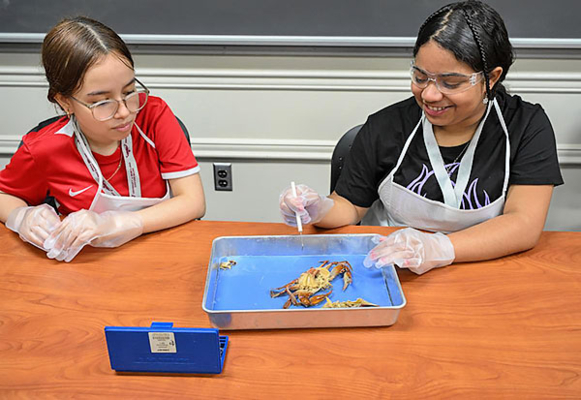
The University of Maryland Eastern Shore (UMES) is helping shape a future workforce in STEM-related careers through youth development experiences. Among them, Brad Hartle, a senior educator with UMES Extension 4-H STEM, demonstrates and involves young people aged 10-18 in hands-on dissections, mostly marine.
You can find him conducting programming throughout the year in public and private schools, summer camps, STEM festivals and other educational youth events across the Eastern Shore of Maryland. These lessons educate young people in anatomy, biology, zoology and marine science through first-hand experiences that can’t be replicated by a lecture, book or virtually.
“Dissecting a squid, grayfish or crab can provide an increased appreciation and understanding of anatomy, while also sparking interest for the next generation of doctors, nurses, veterinarians, biologists, zoologists and marine scientists,” Hartle said. "Seeing how organisms have different organs, internal and external structures can strengthen youths' understanding of biological systems and connect them to their own human biology."
Watch a UMES Extension 4-H STEM dissection.
Dr. Dennis Donaldson Jr. appointed as national 4-H Beyond Ready lead adviser
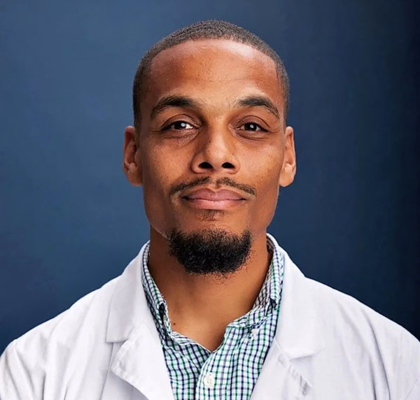
Dr. Dennis Donaldson Jr. was selected by the National 4-H Council and the W.K. Kellogg Foundation to serve as the Beyond Ready 1890s lead adviser. An assistant professor and STEM Extension specialist at Virginia State University, Donaldson has taken on the role of national coordinator to support the 19 1890 Land-grant Universities to strengthen their 4-H youth development programs through the Beyond Ready national initiative.
The position focuses on capacity building, data collection and professional development to help each 1890 university meet its action plan goals and align with the national 4-H Beyond Ready framework, which prepares young people to be healthy, productive and engaged for work and life.
“The goal of Beyond Ready is to increase the number of young people we impact to 10 million by the year 2030,” said Donaldson. “Young people today require new skills and competencies to prepare them for tomorrow’s challenges. The Beyond Ready initiative establishes a framework to accomplish this, and I’m honored to be involved in this capacity.”
From helping other 1890 universities become AI-ready to better take advantage of modern technological efficiencies to running programs where kids learn to code and program Lego robots, Donaldson is approaching his new role with dedication and a goal of opening youths’ eyes to the vast possibilities in STEM.
“When kids are introduced to something new, sparks can be ignited,” said Donaldson. “I’m excited to see what comes of their journeys.”
WVSU 4-H summer camps offer hands-on experiences in neuroscience, cybersecurity
By Alisha Jarrett
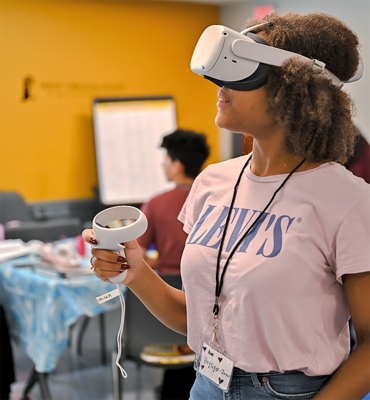
West Virginia State University’s (WVSU) 4-H program is offering two free summer camps for students entering grades 7-10: the Mind Marvel Neuroscience Camp and the Yellow Jacket CyberDefender Summer Camp. Both camps immerse students in hands-on learning and modern science and technology topics.
The Mind Marvel Neuroscience Camp explores the brain and nervous system. Campers will study brain anatomy, how synaptic networks function and how the brain perceives pain, responds to addiction and recovers from injury. Interactive sessions will help students develop critical thinking and encourage discussion of current neuroscience and medical issues. The camp aims to foster meaningful dialogue, creating an environment that encourages curiosity and scientific inquiry.
The Yellow Jacket CyberDefender Summer Camp introduces the basics of cybersecurity. Students will learn about digital security topics such as threat identification, authentication tools, cryptography, social engineering and networking. The program builds foundational skills and highlights technology-focused career paths.
“Our goal is to create an environment that sparks students’ curiosity and gives them a safe space to question and explore,” said WVSU 4-H Specialist Vathani Amarasingham. “By the end of camp, we want each student to feel seen, heard and inspired — and to leave with the confidence and motivation to continue learning.”
Both camps stress collaboration, skill-building and exposure to future academic and professional opportunities, helping students gain knowledge, make connections and discover new areas of interest.