
Extension Today
News from and about the 1890 Land-Grant Extension SystemMessage from the Chair

Dr. Raymon Shange, 1890 Extension Administrator, Tuskegee University
As the Association of Extension Administrators continues to spotlight transformative work across the region, this issue of Extension Today highlights the powerful agricultural innovations emerging from the 1890 Land-grant Universities.
Rooted in a mission to serve communities, Extension programs in the 1890 region are advancing practical, science-based solutions that strengthen farms, families and rural economies. From artificial intelligence systems and precision agriculture tools scaled for small and mid-size producers, to soil and food health strategies grounded in conservation, these institutions are demonstrating how innovation can be both cutting-edge and community-centered.
Equally important, innovation within the 1890 Extension system extends beyond technology to include creative approaches to strengthening small farm profitability, such as agritourism, native essential oils to improve livestock digestion and innovative seasonal management of cultural crops. By integrating culturally relevant education, leveraging community-based research and fostering cross-sector collaborations, 1890 Extension professionals are expanding access to opportunity and ensuring that agricultural progress is for all.
As you read this issue, we invite you to explore how the ingenuity, resilience and leadership of the 1890 region are shaping the future of agriculture and reinforcing Extension’s vital role in advancing prosperity for all.
Tree Amigos program expands urban gardening initiatives
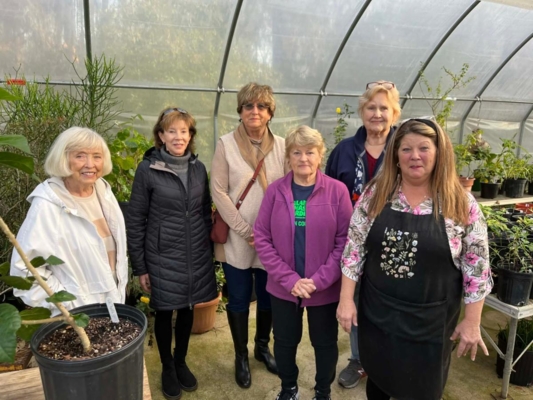
The Tree Amigos program at the Coosa Valley Youth Detention Center in Anniston, Alabama, is part of a 30-year partnership with the Alabama Cooperative Extension System (Alabama Extension) at Alabama A&M University. Through this horticulture and environmental therapy program, youth offenders gain hands-on experience in gardening and tree care under the watchful eyes of Master Gardeners and Alabama Extension staff.
As interest grows in nontraditional gardening methods, such as hydroponics and aquaponics, the program has expanded to teach young people how to grow fruits and vegetables without soil. Urban Regional Extension Agent Hayes Jackson continues to meet weekly with youth at the center’s greenhouse and nursery, while Agent Assistant Angie Patten manages the greenhouse and aquaponics systems.
The overall objectives of the program are to spark interest in horticulture, build responsibility and provide young people with volunteer hours through maintaining the greenhouse and nursery. The produce grown also serves as a teaching tool for healthy eating and basic food preparation.
By incorporating innovative, soil-free growing techniques, the Tree Amigos program offers young people practical career and life skills they can use after exiting the Coosa Valley Youth Detention Center. Learn more about urban agricultural initiatives at Alabama Extension at AAMU.
Youth in Agriculture Camp

The future of farming did not arrive on wheels at the Youth in Agriculture Camp. It arrived from above.
During the two-day camp, 75 young people aged 10-17 participated in hands-on agricultural learning that blended traditional farming practices with emerging technology. A featured drone demonstration introduced participants to precision agriculture techniques used for crop scouting, plant health monitoring and soil assessment. The activity provided a real-world example of how technology supports sustainable decision-making in modern agriculture.
In addition to the drone demonstration, students explored specialty crop production and container gardening, reinforcing STEM-based learning and expanding their understanding of diverse agricultural systems. These experiences helped participants see how innovation and agriculture work together to improve food production and environmental stewardship.
The event also drew 30 parents, educators and community members, bringing total participation to 105 individuals. Feedback from attendees reflected a strong interest in technology-driven agriculture, with many young people expressing a desire to continue learning about drones and sustainable crop management.
The program represents a $26,250 investment in youth agricultural education, based on an estimated value of $350 per participant. Early exposure to precision agriculture and sustainable practices can help prepare young people for future careers in agribusiness while supporting long-term agricultural productivity in the Collins community. The Youth in Agriculture Camp is helping cultivate the next generation of agricultural innovators and stewards of the land.
Innovative low-tunnel project boosts youth gardening at Horizon Education Centers
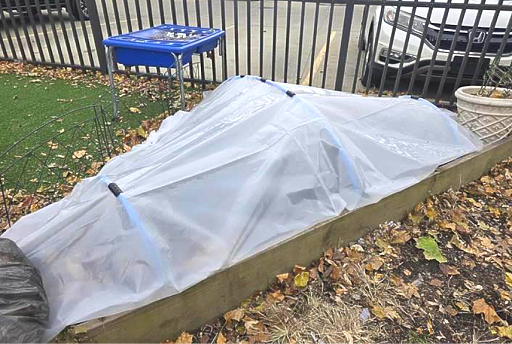
Central State University (CSU) helped a local learning center plan and implement an innovative yet simple solution to extend the growing season for better youth agriculture education.
Northeast Ohio CSU Extension educators Andrzej Czarniecki and John McGovern provided technical assistance to the Northeast Ohio-based Horizon Education Centers, a multi-campus regional educational provider of academic enrichment, after-school care, tutoring, early childhood education, youth development and summer camps throughout the year.
The center offers a gardening program that has been challenging to run due to the short growing season in Ohio. To address the issue, the Extension educators consulted with Horizon’s administration to develop a feasible plan to implement agriculture innovation solutions for season extension, using low tunnels on existing raised beds. The team discussed a do-it-yourself-centered design approach to encourage staff and student engagement in planning, construction and continued use.
The CSU Extension educators led a two-hour, hands-on workshop for 25 Horizon teachers and leaders. The session included 45 minutes of classroom instruction on the principles of low tunnels, followed by 75 minutes outdoors demonstrating build techniques and hands-on construction of low tunnels using multiple methods.
Following the workshop, the educators coordinated technical assistance visits to all 11 Horizon sites across Cuyahoga County. Over two weeks in mid-November, they spent 30-60 minutes at each site providing location-specific guidance on materials, construction and maintenance. Additional follow-up visits are planned to ensure full implementation of low tunnels at all sites.
Enhancing livestock monitoring through drone technology
By Kwame Matthews
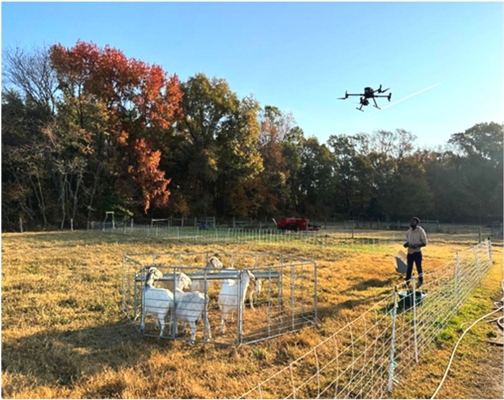
Delaware State University (DSU) Extension and research has recently conducted a drone-based demonstration and research project using a drone fitted with a thermal camera as an innovative tool to improve livestock health monitoring in small ruminant production. This effort focused on demonstrating how drone-mounted thermal imaging can support producers with efficient, non-invasive animal health surveillance on pasture.
The project aimed to showcase two key outcomes:
- How drone technology can provide accurate, real-time insights into animal body temperature and overall health without the need for frequent animal handling.
- How this approach can reduce labor demands and stress on animals while improving on-farm decision-making.
Results demonstrated a strong correlation between drone-based temperature readings and traditional rectal measurements, confirming drones' reliability as a practical monitoring tool. Importantly, animal stress indicators declined over the monitoring period, indicating no negative welfare impacts from drone use.
Through a field day attended by 20 participants and a presentation at the annual Delaware Agriculture Week, which engaged 10 farmers, DSU provided accessible, science-based information on adopting drone technology to enhance herd health monitoring, promote precision livestock management and support more sustainable agricultural systems.
Innovative winter management of muscadine grapes in North Florida
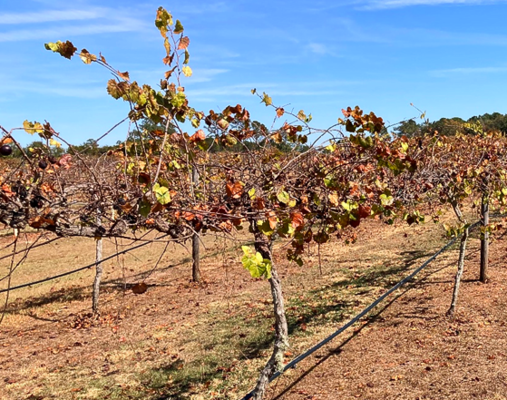
Muscadine grapes, native to the southeastern United States, are uniquely adapted to the region’s hot, humid climate and are valued for fresh consumption and value-added products such as juice, jelly and wine. Their success in North Florida depends not only on climate resilience but on innovative winter management practices that protect future yields.
As temperatures cool and daylight shortens, muscadine vines enter dormancy — a natural rest period similar to deciduous trees shedding leaves. Though vines appear inactive, dormancy is a critical phase where energy is conserved and next season’s growth is protected. In North Florida, where freeze events are more frequent and unpredictable than in Central or South Florida, understanding dormancy is especially important.
Next year's shoots and fruit are already formed inside compound buds on one-year-old wood. Pruning too early disrupts this process, increasing the risk of frost damage and reducing fruitfulness. Research-based recommendations emphasize delaying pruning until mid-February or after the last major frost, a practice that improves bud survival and stabilizes yields.
Early winter instead becomes a strategic planning window. Growers can optimize vineyard performance by adjusting irrigation, withholding nitrogen fertilizer, improving sanitation to reduce disease pressure, repairing trellises and maintaining tools. Monitoring vineyard drainage and aerial root development also supports long-term vine health.
By aligning pruning timing, sanitation and infrastructure maintenance with vine physiology, growers are using innovation — not technology alone but informed decision-making — to build resilient muscadine production systems for the future.
FVSU Fab Lab connects students with technology, entrepreneurship, workforce training
By ChaNaè Bradley, Senior Communications Specialist
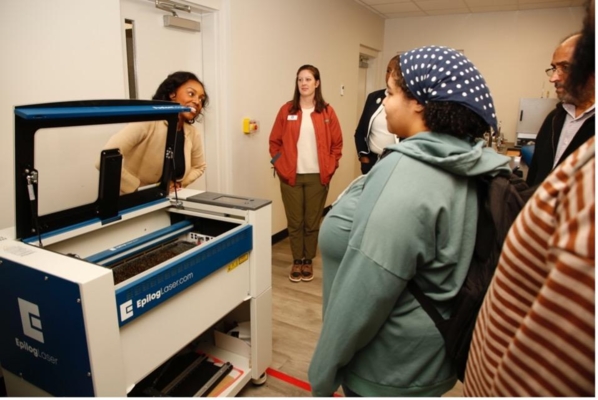
Students across the state of Georgia are learning how to use advanced technology while simultaneously learning entrepreneurial skills through an innovative fab lab offered by Fort Valley State University’s (FVSU) College of Agriculture, Family Sciences and Technology.
Heaven Whitby, director of the FVSU Fab Lab, is leading this effort. A fab lab is a facility that offers community workshops with digital fabrication tools for Computer Numerical Control (CNC) milling, bioengineering and more. The lab creates an environment for participants to design or create products.
The FVSU Fab Lab is located on FVSU’s Warner Robins campus. It is the first historically Black university Chevron-funded fab lab in the world.
Whitby, who joined FVSU three years ago, was selected to lead FVSU’s Fab Lab. The Howard University alumna has a background in maternal and childhood epidemiology. She also has experience managing community start-ups. Prior to her role at FVSU, she served as director of Startup Macon, an entrepreneurship ecosystem builder that provides support to small businesses.
After spending time in California to learn how fab labs operate, Whitby customized a lab that would be accommodating to students in Georgia. As a result, Whitby interacts with students from schools in Bibb, Houston and Peach counties. She also connects with educators in rural communities throughout the state with interests in technology and innovative practices.
As director, she provides basic instruction about digital design and the use of machines and tools. She also teaches students and young adults how to use cutting-edge tools and software to bring their ideas to life, which allows them to make different products.
Next generation of spatial thinkers inspired at 11th annual Geographic Information Systems Day
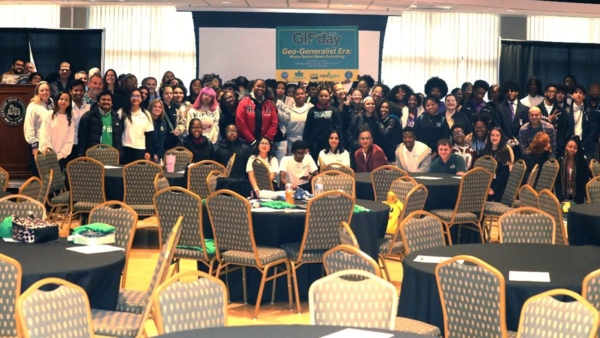
More than 120 Kentucky high school and college students explored how geography drives modern problem-solving during Kentucky State University’s 11th annual Geographic Information Systems (GIS) Day on Nov. 19, 2025. The event, themed “Geo-Generalist Era: Where Spatial Meets Everything,” showcased the university’s leadership in geospatial education, workforce development and community engagement.
“GIS at Kentucky State University is not just about maps; it is about empowering communities with data, technology and innovation,” said Dr. Buddhi R. Gyawali, professor of geospatial technology application.
Participants included undergraduate and graduate students and high school students from Carter G. Woodson Academy, Eminence High School and Grace James Academy of Excellence. University representatives introduced academic programs, scholarships and dual-credit opportunities, including the GI Science and Technology course.
Kentucky State President Dr. Koffi Akakpo, Provost Dr. Michael Dailey and Dr. Marcus Bernard, dean of the College of Agriculture, Health and Natural Resources, highlighted the university’s expanding GIS curriculum and STEM career pipelines.
Students engaged in hands-on mapping activities, geocaching, GIS trivia and live drone demonstrations led by Jeremy Sandifer and Seiler Instruments. A poster competition showcased graduate research on environmental monitoring, land use and climate resilience. The keynote address was delivered by Dr. Forrest Stevens of the University of Louisville, who discussed the growing role of GIS in agriculture, environmental stewardship and public service.
Led by the Center for Geospatial Intelligence and Environmental Security, the event inspired many students experiencing GIS and drone technology for the first time, reinforcing Kentucky State’s commitment to developing the next generation of spatial thinkers.
Delivering agricultural innovation, workforce development across Oklahoma
By Dr. Sudip Kunwar
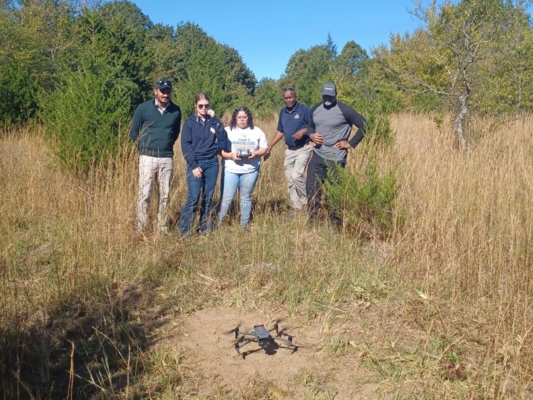
Today’s agricultural landscape is rapidly evolving, thanks to tools like GPS-guided equipment, field sensors and drone technology that provide farmers with a clearer view of their crops and livestock. While these innovations are becoming standard on larger operations, many limited-resource producers still face challenges accessing and adopting them. This gap can make it difficult to manage inputs efficiently and maintain profitability. As precision agriculture advances, reliable internet and broadband access have become essential and often determine whether producers can fully benefit from these modern tools.
To help close this technology gap, Langston University’s Sherman Lewis School of Agriculture and Applied Sciences (LU-SL/SAAS) is expanding its precision agriculture outreach for small-scale farmers across Oklahoma. Through hands-on field days and on-farm demonstrations, producers are gaining practical experience with tools such as drone-based scouting and spraying, soil-moisture sensors and variable-rate mapping. These technologies are helping farmers make more informed decisions about irrigation, fertilizer use and pest management, boosting both efficiency and long-term sustainability.
The program also cultivates the next generation of agricultural innovators. Undergraduate students Josie Throckmorton, Jada Watson, Mason Johnson, Mollie Throckmorton and Anthony Fuentez are leading the Sky Wrangler initiative, developing cost-effective drones designed to monitor pastures and small ruminants. Under the guidance of Marcio White, GIS instructor, LU-SL/SAAS, the team is also advancing autonomous ground systems through the Farm Robotics Challenge, creating practical technologies that support tasks such as crop monitoring, weed control and overall farm management. These efforts are helping producers gain confidence in adopting new tools.
Watching what you eat: Lincoln University research advances food safety
By Alex Naughton
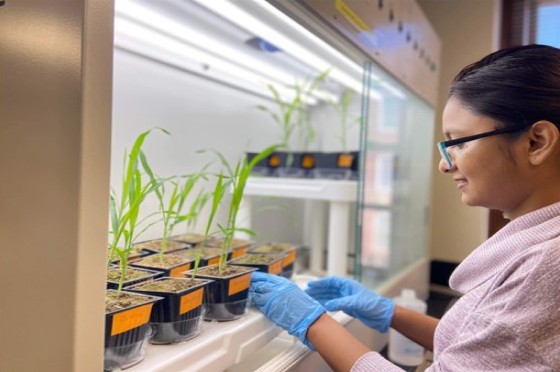
A lot goes into our crops before they ever leave the soil. Farmers use various products to protect crops from pests and encourage bountiful harvests. Many of the components of these products have been studied; however, some newer materials, such as nanoparticles, are less understood.
Dr. John Yang, a professor of environmental soil chemistry at Lincoln University of Missouri (LU), is conducting a research project at Lincoln focused on uncovering the ecological risks of nanoparticles in soil-plant ecosystems.
“Nanoparticles have been widely used in agricultural applications as they enhance effective treatment for plants. Those materials make their way into the soil and water, which then makes their way into plants,” Yang said. “That will have some kind of effect on human and environmental health.”
Yang’s project seeks to accomplish three objectives:
- Evaluating how nanoparticles are absorbed by plant roots.
- Analyzing how nanoparticles accumulate in plant tissues, specifically the roots, stems and leaves.
- Observing the impact of nanoparticles on microbial communities in soil.
“This research will provide valuable scientific evidence on the risks of nanoparticles, which helps how we regulate nanoparticle application in agriculture, specifically in soil and water,” Yang said.
He explained that the project’s findings will be published, making them available to policymakers responsible for determining how to safely use nanoparticles. In addition to policymakers, Yang’s research will help farmers make informed decisions when deciding what products to use and how to use them, resulting in healthier crops and foods.
Using essential oils, plant nutraceuticals to improve cattle digestion, reduce greenhouse gases
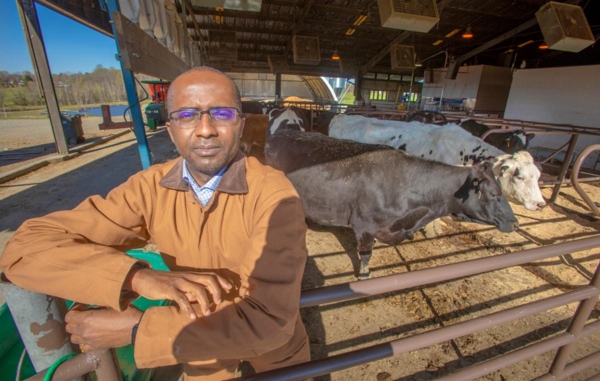
Through batch culture studies, simulated rumen techniques and data analysis, North Carolina A&T State University ruminant nutrition professor Uchenna Anele, Ph.D., is looking for essential oils and plant nutraceuticals that will cut down on methane emissions in cattle and improve the animal’s gut health.
The Evans-Allen funded study begins with a batch culture, a closed culture system that contains limited amounts of nutrients, which screens numerous plant nutraceuticals, medicinal plants, essential oils and prebiotics.
“We have three orbital shakers in a reach-in incubator,” said Anele. “Each orbital shaker can contain up to 88 serum bottles. It’s like mimicking what goes on inside the ruminant.”
A handful of these samples are tested to see if they can reduce greenhouse gas emissions without affecting the animal’s ability to digest dry matter and, as an incentive, if they can increase total volatile fatty acids and microbial mass.
Researchers run samples through a device that mimics the cattle’s feeding and digestive habits and collects gaseous material in a gas bag. “The digested material is then collected,” Anele said. “You have a container that has artificial saliva, simulating the production of saliva in animals, and it’s being infused into 1-liter vessels, representing the rumen of the animals and breaking down the feed.”
Anele and his students look at the products used from the initial batch culture and, by comparison, analyze their effects on breaking down dry matter. The research has yielded results that can potentially reduce greenhouse gases, Anele said, but the project is ongoing.
Flying toward smarter forests
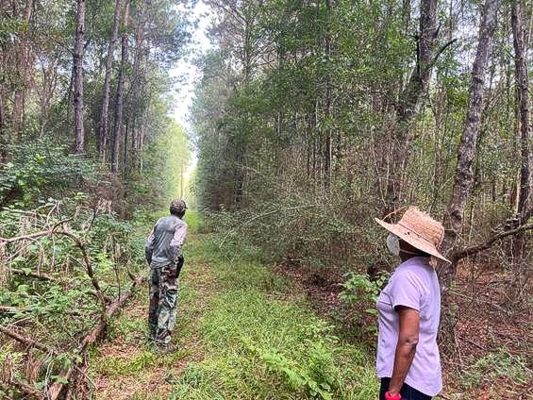
Forestry is important to the economies and ecosystems across East Texas. Pine woods and hardwood forest systems are big businesses for many East Texas landowners. To manage these timber-producing assets, many landowners are turning to new technology to gain deeper insights into their forestry resources.
Unmanned aircraft, more commonly known as drones, can help with many aspects of timber production. The Prairie View Agriculture and Natural Resources Unit has begun reaching out to landowners across East Texas to provide education and outreach on how drones can be used in forestry.
Timber inventories and field observations can all be accomplished through real-time data gathered by drones. A drone can cover acres of land while providing high-resolution imagery all in a matter of minutes. While some of this land can be difficult to walk through, drone technology makes it easier to gather this data. Using multispectral and infrared sensors, drones can help detect stress, invasive insects and disease in trees before the damage is visible to the human eye.
Accurate estimates of tree density, canopy cover and biomass can help landowners with forest planning, thinning operations, harvesting decisions and reforestation efforts. Drones allow staff to create aerial maps and three-dimensional models of their land. Monitoring forest health over time can help increase productivity while improving the long-term health of a forest.
Wildfire monitoring is a crucial part of forestry in East Texas. A drone with thermal sensors can help detect heat signatures and monitor controlled burns from the air. They can also be used to monitor property lines, identify invasive vegetation and assess wildlife habitat.
Agriculture meets innovation: SC State PSA meteorological weather station
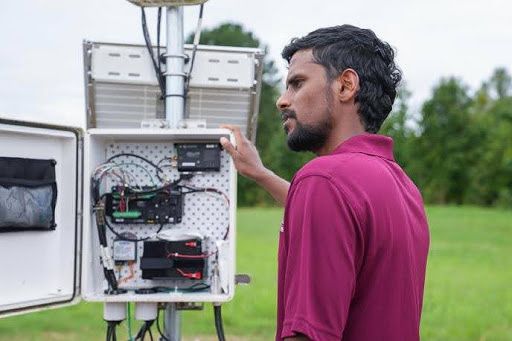
At South Carolina State 1890 Research and Demonstration Farm in Olar, South Carolina, innovation is at the heart of their work, and the metropolitan meteorological weather station is a prime example. The only system actively measuring weather conditions in Olar fills a critical gap for local growers, researchers and community members seeking reliable, real-time environmental data.
The station, designed by Dr. Hemanth Dakshinamurty, research scientist at SC State Public Service & Agriculture (SC State PSA), records weather information every five minutes, providing a precise image of changing conditions. The data measures temperature, relative humidity, dew point temperature, wind speed, wind direction, precipitation, solar radiation and soil moisture. It is streamed directly to the live public dashboard, empowering users to make informed decisions, conduct research and better understand the environment surrounding the farm.
“The Olar weather station is a step in the right direction for long-term continuous monitoring of parameters that influence agriculture,” said Dakshinamurthy. “This weather station data will assist with all research that is being conducted on the 1890 Research and Demonstration Farm to understand how these parameters affect their study.”
The data is accessible via the National Oceanic and Atmospheric Administration (NOAA) through the Citizen Weather Observer Program (CWOP), under station code GW5730, ensuring information benefits both local and national climate networks. To access the weather station’s data, visit https://1890.info/weather. For questions, contact Dakshinamurthy at hdakshin@scsu.edu.
Innovations transforming agriculture: Engaging youth through drone education
By Dr. Charity Schaffer
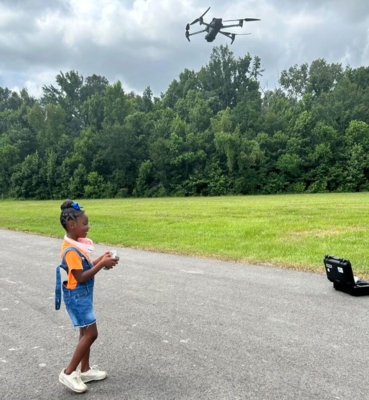
Innovation in agriculture begins with education, and at the Southern University Agricultural Research and Extension Center, youth programming is intentionally preparing students to engage with the emerging technologies shaping the future of agriculture. Precision Agcademy, a youth drone education initiative developed through the Ag Center, introduces students to precision agriculture concepts through unmanned aerial systems (UAS) and experiential, hands-on learning.
Developed and facilitated by Southern University Ag Center Youth Development Agent Dr. Charity Schaffer, Precision Agcademy provides students with foundational instruction in drone safety, aviation basics and flight operations, while demonstrating how drones are applied in modern agriculture for crop management, land assessment, livestock operations and natural resource management.
A defining component of Precision Agcademy is its FAA Part 107 drone certification pathway, which prepares eligible students to pursue an industry-recognized credential and explore career opportunities at the intersection of agriculture, technology and aviation.
To broaden access and engagement, Precision Agcademy also delivers Drone Demo Daze, interactive drone demonstrations hosted at schools and community events. These sessions allow students to observe live drone flights, learn how data supports agricultural decision-making and explore STEM and agricultural career pathways in a hands-on environment.
Through Precision Agcademy and Drone Demo Daze, the Southern University Ag Center continues to advance innovative Extension programming that connects young people to agriculture while building skills aligned with the future workforce.
TSU hosts national generative AI workshop for Extension professionals
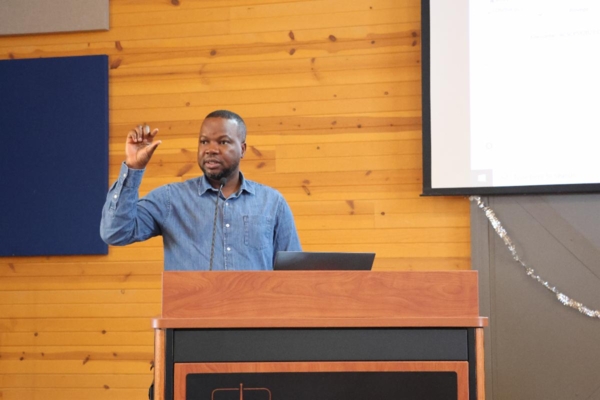
Tennessee State University’s (TSU) College of Agriculture recently hosted a first-of-its-kind national workshop focused on the use of generative artificial intelligence in Cooperative Extension at the Agriculture Research and Education Center Pavilion.
Led by Dr. Abdelaziz Lawani, the two-day Empowering U.S. Extension Through GenAI workshop convened dozens of Extension professionals, faculty members and university scholars from across the United States, including participants traveling from as far as Oregon and Arizona. Attendees represented both 1862 and 1890 Land-grant Universities, as well as national Extension partners, highlighting broad national interest in the role of AI in Extension work.
The workshop delivered a blend of foundational instruction and hands-on training designed to help Extension professionals responsibly integrate generative AI tools into their daily work. Sessions covered the fundamentals of prompt engineering, advanced prompting techniques and applied methods for improving program delivery, data analysis and decision-making.
Participants explored practical use cases for agricultural Extension, 4-H and youth development programming, agribusiness management, and community and economic development initiatives. Training also included applied exercises using real-world data and tools such as U.S. Census API data, R Markdown and workflow automation, reinforcing how AI can support evidence-based outreach and reporting.
As the first national training dedicated specifically to generative AI in Cooperative Extension, the workshop underscored TSU’s commitment to innovation and its leadership in preparing Extension professionals to adapt to emerging technologies that will shape agriculture, education and community engagement for years to come. The event also fostered collaboration, dialogue and shared learning across diverse regions nationwide.
Tuskegee expands on hydroponics
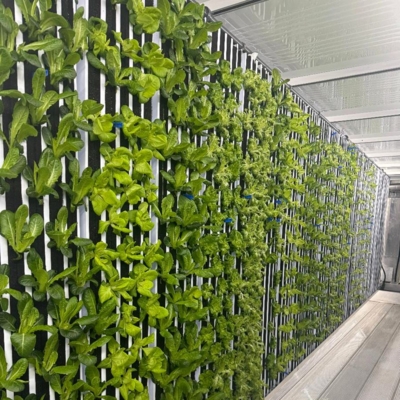
Tuskegee University Extension turned a shipping container into a state-of-the-art growing phenomenon. The $130,000 hydroponic shipping container has been the focal point of producing vegetables and small fruit plants for the community and beyond. The mobile growing machine housed at the Tuskegee University Urban Agriculture Innovation Center (TUAIC) in Montgomery, Alabama, provides a program to educate and increase the growing process in a controlled environment.
The freight farm at TUAIC is not the only area where Tuskegee has hydroponic units. As part of expanding the growing process and providing additional education, several hydroponics units have been set up around campus and in the farm's growing chambers at Tuskegee.
Carnell McAlpine, agriculture demonstration of the TUAIC freight farm, expressed the excellent work being done with the hydroponic garden. "It is hard work but very fulfilling," McApline said. "I have harvested 144 pounds of mustard and collard greens, which is 1,000 mustard and collard greens from the closed container."
Tuskegee has a history of growing vegetables and fruits hydroponically. Tuskegee was part of NASA's grand experiment in growing sweet potatoes and peanuts hydroponically for space exploration. The technology used to grow the sweet potatoes and peanuts has been transferred and improved to grow the latest produce within the enclosed container.
McAlpine continues to explain that growing outdoors can be difficult because conditions for growth cannot be controlled, such as weather, insects and weeds. "It really is hard to grow outside. Everything is controlled in the shipping container," McAlpine said.
UAPB graduate student among top winners at AI in Agriculture Hackathon

Ram Babu Kurapati, a graduate research assistant in the Department of Aquaculture and Fisheries at the University of Arkansas at Pine Bluff (UAPB), was part of a team that earned third place at the AI in Agriculture Hackathon. Hosted by the University of Arkansas in Fayetteville, the event gave graduate students from both of Arkansas’ land-grant universities the chance to address real-world scenarios commonly faced in the agricultural industry.
Dr. Yathish Ramena, director of UAPB’s Aquaculture and Fisheries Center of Excellence and Kurapati’s research adviser, said the competition featured nine competitive teams tasked with solving a large-scale data challenge in corn breeding. Success demanded not only programming skills but also experience managing complex biological datasets – expertise Kurapati developed through his research at UAPB.
The challenge required analyzing more than 400,000 data points covering environmental conditions, molecular markers, and yield and yield components, Ramena said. Teams were asked to design models that predict the best genetic crosses across three major U.S. production regions – a real-world problem that breeders face when integrating genomic and environmental data to increase crop yield and sustainability.
“Mr. Kurapati and his teammates combined their diverse strengths to create a solution that merged machine learning with biological insights,” he said. “By focusing on molecular markers from top-yielding corn lines, their model identified the most promising genetic crosses for each region, an integrative approach that secured their place on the podium.”
Agritourism offers new markets, transforming on-farm income streams
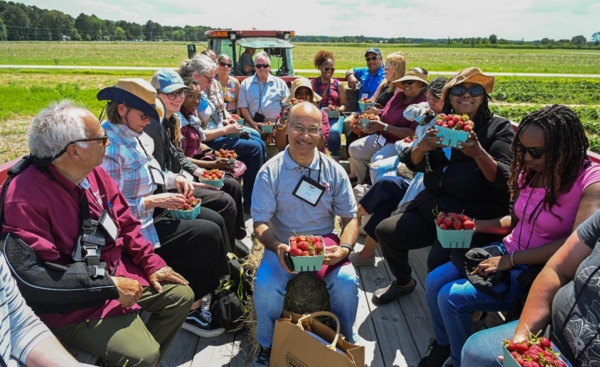
University of Maryland Eastern Shore (UMES) Extension encourages farmers to consider agritourism as a means of increasing revenue by offering educational and entertainment activities on the farm. Agritourism can also create marketing opportunities for farm-produced products sold directly to consumers.
Dr. Prem Bhandari, agritourism and value-added agricultural marketing specialist, helps farmers find their space in the burgeoning sector. He led UMES’ inaugural 2023 Maryland Agritourism Conference and has since organized a series of traveling workshops.
According to the latest U.S. Census of Agriculture in 2022, 354 Maryland farms supplemented income through agritourism, a 20% increase in five years. The total value of sales from these operations was $14.5 million, a 47% increase from the previous census, indicating an increasing role in Maryland’s economy.
Yet there are challenges to overcome and support needed to keep farmers farming. America lost 141,733 farms and more than 20 million acres of farmland between 2017 and 2022, according to the census. Among the reasons, Bhandari said, are competition with larger operations, market access, labor shortages, price fluctuations and weather events. Agritourism could be an answer with the right Extension support services.
“Many farmers start agribusinesses without formal or informal training, as they are hard to come by in the market. They may lack the necessary knowledge and skills needed for agritourism management,” Bhandari said, noting UMES Extension’s many training and networking opportunities.
UMES is hosting the 2026 Maryland Agritourism Conference from Nov. 15-17 at the Hyatt Regency in Cambridge, Maryland.
Virginia State University helps small, beginning, veteran farmers adopt precision agriculture technology
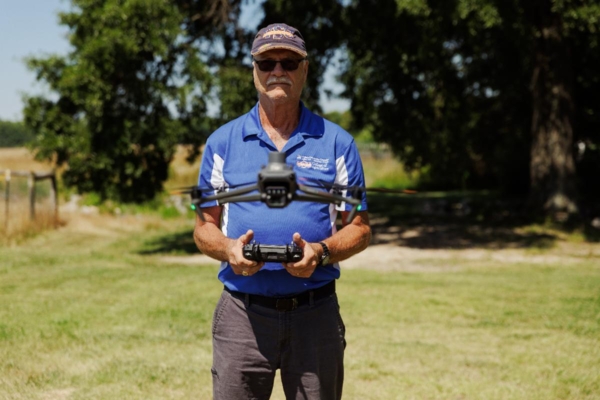
Aerial imagery in agriculture is nothing new. Taking a birds-eye view of the land to assess land use, boundaries, soil conditions or crop health helps growers manage their operations. Today, instead of helicopters and cameras, it’s often drones conducting aerial imaging.
Tim Sexton is the Virginia State University Small Farm Outreach Program’s drone pilot. With decades of experience in soil science and aerial imagery, Sexton runs workshops to help Virginia growers see how using drones for precision agriculture can save them time and money.
“Precision agriculture is making decisions during the growing season instead of before or at the beginning of the growing season,” explains Sexton.
Drones help farmers monitor crop and soil conditions in real time and respond to issues like insect infestations, disease outbreaks or nutrient deficiencies before significant losses occur. Sexton gives the example of a thrips infestation moving northward. Traditionally, farmers would use a net to check their fields and spray the whole field if thrips were present.
“With aerial imagery, the infrared spectrum can detect differences in chlorophyll production before it’s visible to the naked eye,” he says. “You can spray that area instead of the whole field. Some herbicides and pesticides are $400 a gallon, and reducing use helps protect the environment.”
As drone costs have decreased over time, they have become more practical for small operations. Sexton runs workshops and demonstrations to help farmers understand and adopt drone technology, emphasizing that precision agriculture can be accessible to small, beginning and veteran farmers.
Breaking barriers
By Alisha Jarrett
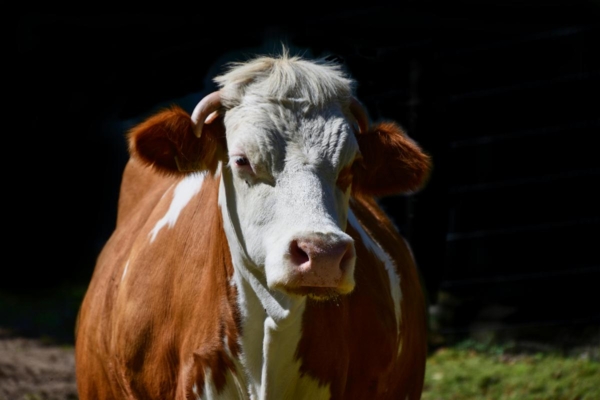
Virtual fencing, or virtual fence, is gaining attention as a modern solution for livestock management. West Virginia State University (WVSU) Extension Service is exploring this technology, which uses GPS-enabled collars to create invisible boundaries managed via a smartphone app. While traditional fencing remains necessary for outer perimeters, virtual fencing can create flexible interior divisions, making rotational grazing more versatile.
“Virtual fencing can transform our approach to pasture and livestock management,” said WVSU Agriculture and Natural Resources Educator Carter Taylor. “This technology benefits both new and experienced farmers by making livestock handling safer, more efficient and adaptable.”
The main advantage of virtual fencing is flexibility. Producers can quickly adjust grazing areas, avoiding the labor and cost of moving physical fences. This is especially helpful on land with steep slopes or difficult terrain. There is a recurring subscription fee per collar, but the system can boost forage productivity, improve grazing efficiency and reduce management hours. Virtual fencing supports conservation by allowing better control of livestock pressure on sensitive resources. As interest grows, this technology is poised to reshape land management for farmers.
Virtual fence is being implemented nationwide, and the West Virginia United States Department of Agriculture's Natural Resources Conservation Service (NRCS) branch is actively considering its adoption as an approved conservation practice. If authorized, NRCS would provide cost-share assistance to help producers offset their initial start-up costs. Producers are encouraged to stay updated, as NRCS continues to assess and support this innovative approach for future use.