
Extension Today
News from and about the 1890 Land-Grant Extension SystemMessage from the Chair

Dr. Raymon Shange, 1890 Extension Administrator, Tuskegee University
We continue to encounter headlines concerning record-level heat, flash flooding, high-level storms and the consequences to human life, economies and communities. As we continue to experience disasters at a historical scale, we are seeing Cooperative Extension in the 1890 region respond in a way that both honors our land-grant mission and demonstrates the strength of our connection to the communities we serve. Extension professionals are often among the most trusted sources of information before, during and after an emergency, helping families, farmers, businesses and local leaders navigate uncertainty with practical resources and science-based guidance.
Preparing for the unexpected is no longer optional; it is an essential responsibility for all of us. Through education, partnerships and community engagement, Cooperative Extension remains committed to helping residents prepare today so they can respond confidently tomorrow. The greatest measure of preparedness is not the absence of disasters but the capacity of communities to endure, adapt and recover when they occur.
Severe weather warnings, alerts

By Dr. Karnita Garner
Warnings for severe weather
Severe weather warnings and alerts can help you prepare for natural disasters, such as tornadoes, hurricanes, flash floods, winter storms and other severe weather threats. Severe weather watches and warnings are issued to the public via the National Oceanic and Atmospheric Administration, NOAA Weather Radio, mobile devices and most radio and TV stations.
In addition, meteorologists are professionals trained to analyze patterns and natural indicators of weather conditions that may be threatening. They recommend the level of shelter necessary based on the type of alert. The different severe weather warnings issued could affect the extent of damage or loss to individuals and communities. Severe weather can develop quickly, so understanding the National Weather Service’s warning system is important.
Receiving weather alerts
A NOAA Weather Radio is also a good way to receive weather alerts. Every home should have one since it operates independently of cellular networks and is extremely reliable. You will receive warnings even if your family is sleeping.
The second way to receive weather alerts is through your smartphone or mobile device. Every smartphone sold in the United States can receive Wireless Emergency Alerts for tornadoes, flash flood warnings, hurricane warnings and other critical messages from the National Weather Service and local authorities. Additionally, most local TV stations offer free apps for this purpose.
While natural disasters are unpredictable, warnings and alerts can keep you informed of severe weather developments and possibly save lives.
Preparing for the unexpected: Genomic research strengthens crop resilience
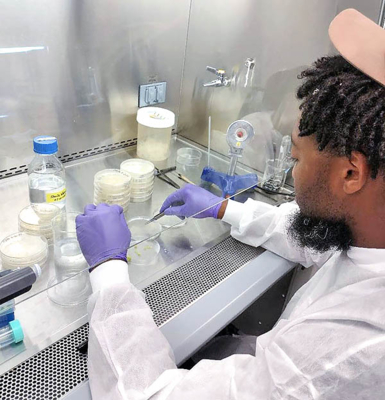
Agricultural emergencies are not always caused by severe weather or even drought. Sometimes, the greatest threats begin with microscopic plant pathogens that spread quietly before symptoms become widespread, devastating crops and reducing yields.
According to the Food and Agriculture Organization of the United Nations, up to 40% of global food crops are lost annually to plant pests and diseases, making early detection and preparedness essential to protecting farmers, food supplies and agricultural economies.
Researchers in Alcorn State University's College of Agriculture and Applied Sciences are helping agriculture stay one step ahead. Led by Dr. Bed Prakash Bhatta, assistant professor of agronomy, a research team that included graduate students Lewis Brooks, Prachi Bista and Emmanuel Clark, along with Dr. Frank Mrema, assistant professor of forestry, published its findings in the peer-reviewed Journal of Genome Biotechnology and Genetics.
The study documented the first chromosome-level whole-genome sequence of Pectobacterium brasiliense strain 25ASUB12, marking the first documented occurrence of the destructive plant pathogen in Mississippi.
By mapping the pathogen's complete genetic makeup, the researchers developed a valuable genomic resource that supports earlier disease detection, advances disease management strategies and strengthens efforts to develop disease-resistant crops.
By publishing their findings, they are making this information available to researchers worldwide and supporting collaborative efforts to detect, monitor and respond to emerging plant diseases before they become widespread agricultural production threats.
Smart biosecurity: Keeping flock healthy, preventing disease outbreaks
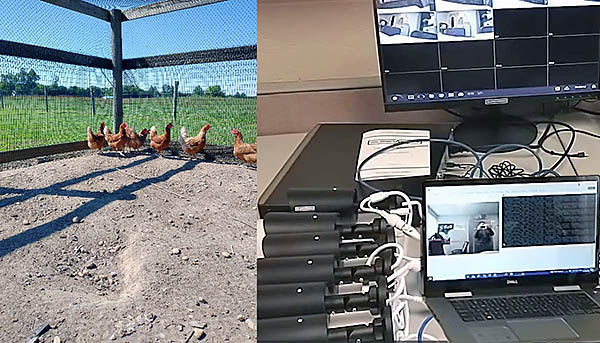
By Amit Singh, Assistant Professor and Poultry Extension Specialist
Animal disease emergencies can have devastating consequences for livestock and poultry producers, particularly small-scale and backyard farms that often have limited resources for disease prevention and response. While strong biosecurity remains the first line of defense against diseases such as Highly Pathogenic Avian Influenza, emerging technologies offer new opportunities to identify risks early and reduce the likelihood of disease outbreaks.
Delaware State University is developing affordable artificial intelligence-based tools to strengthen biosecurity and improve emergency preparedness for small-scale poultry production. Using surveillance cameras and machine learning tools for computer vision, their research focuses on automatically monitoring critical biosecurity practices, including proper use of personal protective equipment, dedicated footwear and adherence to the line of separation before entering poultry houses.
These systems are designed to detect biosecurity protocol violations in real time, enabling producers to take immediate corrective action and reduce the risk of disease introduction.
In addition to enhancing biosecurity, these technologies enable continuous monitoring of flock behavior, feeding activity and movement patterns, facilitating early detection of health abnormalities and timely intervention to prevent disease spread and improve flock welfare. Following model development and stepwise validation, the tools will be tested on backyard poultry farms under real-world production conditions.
By integrating precision livestock technologies with Extension education, DSU Cooperative Extension aims to provide small-scale producers with practical, cost-effective decision-support tools that strengthen biosecurity, improve emergency preparedness, reduce disease risk and promote long-term sustainability and resilience of small-scale poultry production.
Building community resilience through FAMU Cooperative Extension
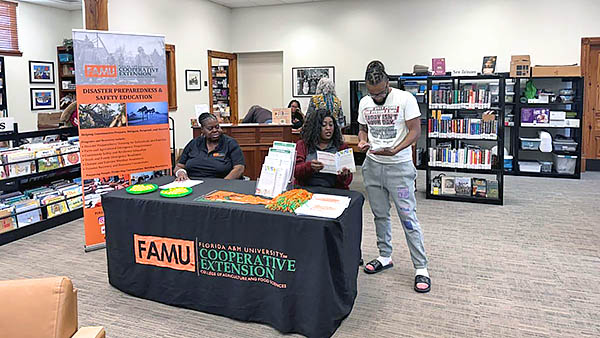
By Kimberly Davis, CRD Program Leader/Extension Emergency Management Specialist
The Florida A&M University Cooperative Extension Disaster Preparedness and Safety Education Program helps Floridians build safer, stronger and more resilient communities through research-based education and outreach. The program provides young people, families, older adults and small-scale farmers and ranchers with the knowledge and skills needed to prepare for, respond to, recover from and build resilience against disasters.
As one of the nation's most disaster-prone states, Florida requires ongoing preparedness efforts. FAMU Cooperative Extension delivers educational programs through workshops, community events, school partnerships, youth camps, preparedness expos, social media outreach and Florida Severe Weather Awareness Week activities. Extension faculty also work closely with emergency management agencies, community organizations and local planning committees to strengthen community readiness.
From April through June 2026, FAMU Extension faculty provided disaster preparedness education and outreach to more than 800 participants statewide. Following disasters, Extension connects communities with recovery resources and educational support through partnerships funded by the U.S. Department of Agriculture's National Institute of Food and Agriculture, Southern Sustainable Agriculture Research and Education and the USDA Rapid Response Program.
“Preparedness saves lives, protects livelihoods and strengthens communities,” said Kimberly Davis, community resource development program leader/Extension emergency management specialist. “When people understand risks and have a plan, they are better prepared to recover and move forward after a disaster.”
Collaborative group of 1890 professionals delivers disaster education
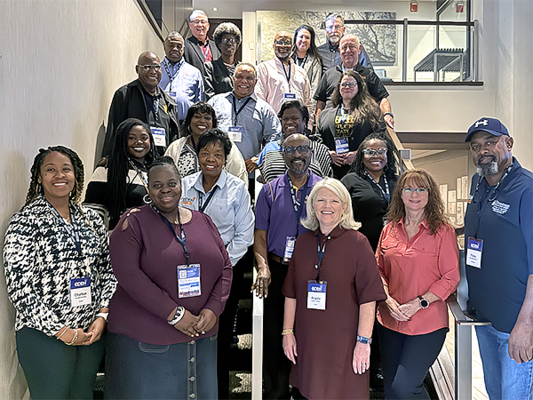
The 1890-Extension Disaster Education Network Advisory Group helps 1890 universities and partners deliver practical disaster education and support to the communities they serve. The AG develops training, tools and community-based projects that help farmers and families prepare for emergencies, respond during disasters and recover. The AG welcomes continued partnership and support to expand effective practices, share them with more communities and strengthen disaster resilience across the 1890 network and beyond.
Accomplishments:
- The AG holds an annual face-to-face meeting to support strategic planning and member training. The group uses its action plan as a roadmap for AG initiatives. Members have presented webinars, collaborated with 1862 EDEN partners to conduct trainings and led EDEN post-conference sessions.
- The AG conducts farmer bootcamps for producers and Extension personnel with sessions on mental wellness during disasters, agricultural risk assessment and planning, and recovery resources. These bootcamps build capacity in disaster planning, farm financial risk management, estate planning and access to emergency resources. Bootcamps have taken place in Georgia (2024) and Tennessee (2026).
- The AG partners with faith-based leaders to share disaster information and uses focus groups to better understand farmers’ needs. It also pursues external funding for Extension research and education. Two active Southern Sustainable Agriculture Research and Education projects (SPDP24-002 and LS20-343) support partnerships that address challenges facing farmers stateside and in the U.S. and Caribbean territories.
For more information about EDEN and the 1890 AG, visit the EDEN website or contact Noel M. Estwick, Ph.D., at 936-261-2526 or nmestwick@pvamu.edu.
Preparing for the unexpected: Extension responds when floodwaters rise
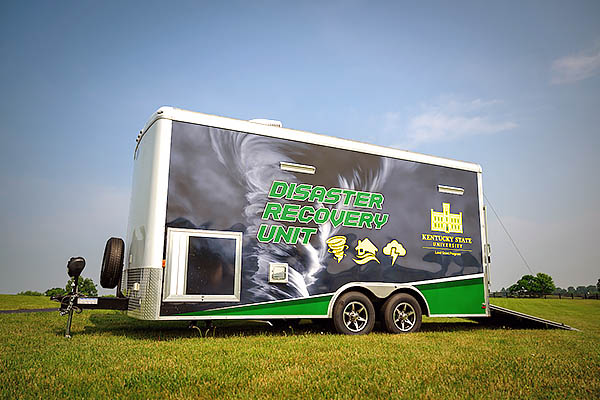
Flooding has become increasingly common across the Commonwealth, and Kentucky State University Cooperative Extension has remained ready to support disaster response and recovery. One notable example of that broad support came in April 2025 when severe flooding displaced families in Frankfort and stranded hundreds of pounds of fish near the Kentucky River.
At the Capital Plaza Hotel, where displaced residents had relocated, the Disaster Recovery Unit served as a mobile resource center. Equipped with laptops, internet hotspots, charging stations and educational materials, the unit helped residents complete FEMA paperwork, access property records and contact loved ones.
Extension specialists also provided guidance on safe home re-entry, mold remediation and disposal of water-damaged materials. Through 4-H youth development, more than 20 children participated in computer-based activities that offered structure and relieved stress. Extension personnel and community partners distributed more than 180 meals and directly served 236 people.
The flooding also required specialized environmental expertise. After the Kentucky River receded, native fish remained stranded in an isolated pool at Buffalo Trace Distillery, nearly a quarter-mile from the river. Students and faculty from Kentucky State’s School of Aquaculture and Aquatic Sciences used seine nets to collect the fish, identify the species and return them safely to the river.
Together, these efforts demonstrate Extension’s broad role after disasters, from providing digital access and recovery information to protecting natural resources. Through education, training and partnerships, Cooperative Extension helps communities prepare before emergencies and respond effectively when they occur.
Langston University Extension: Building resilient communities through emergency preparedness
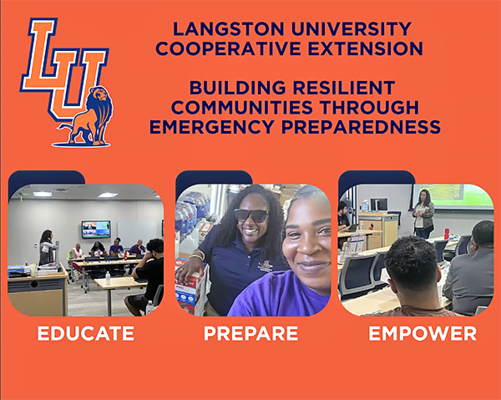
Emergency preparedness extends beyond responding to disasters; it is about building resilient communities before emergencies occur. Whether facing tornadoes, flooding, wildfires, earthquakes, extreme heat, emerging agricultural threats such as the New World screwworm or mental health crises, proactive planning helps protect lives, reduce risk and strengthen community recovery.
Langston University Cooperative Extension is strengthening community resilience by equipping individuals, families and local leaders with the knowledge and resources needed to prepare for emergencies before they happen. Through education, planning and strategic partnerships, Extension is helping communities build the capacity to respond effectively and recover more quickly from disasters.
Current outreach efforts include assisting the Historically Black Town of Summit with updating its emergency preparedness plan, assessing community shelter needs and helping residents develop household emergency plans tailored to their unique circumstances. These collaborative efforts support local decision-making while increasing community readiness for a wide range of natural, agricultural and public health emergencies.
Emergency preparedness also addresses the broader impacts disasters can have on everyday life. Severe weather and other emergencies can interrupt access to food, healthcare, transportation, communication and essential services, while mental health challenges often intensify during and after crises. Extension education encourages residents to identify trusted information sources, strengthen local support networks and ensure that older adults, individuals with disabilities and other vulnerable populations are included in preparedness planning.
Families are encouraged to take practical steps such as assembling emergency supply kits, creating communication plans, staying informed about local hazards and checking on neighbors who may need additional assistance.
By fostering preparedness through education, collaboration and community engagement, Langston University Cooperative Extension is helping Oklahoma communities become safer, more resilient and better equipped to withstand and recover from future emergencies.
N.C. A&T CAES introduces community resources page
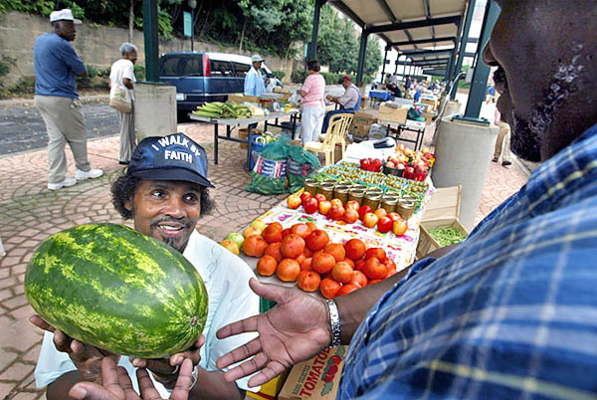
The College of Agriculture and Environmental Sciences at North Carolina A&T State University has added a community resources page to its website, designed to help members of the larger Greensboro, Triad and North Carolina communities find support, especially when facing unexpected challenges.
The page links to educational and practical information offered through Cooperative Extension and college outreach programs but primarily focuses on community resources outside the college and the university. Many, such as the Aggie Source Food Pantry and the N.C. Agromedicine Institute, have collaborated with the college and N.C. A&T Cooperative Extension staff to address critical, immediate needs and to provide long-term educational programs.
“N.C. A&T and the college are part of a larger community,” said Radiah C. Minor, interim dean of the college. “Our research, education and outreach address very fundamental community issues, such as providing food for a growing population, sustaining an environment that can produce that food and understanding nutrition and wellness. We are here as a resource, and it’s our hope that this page will help them navigate external resources to find the best fit and the best service for their needs.”
Recognizing that farming today brings stress and uncertainty, the page includes mental health resources for farmers and rural families, in addition to those for urban families.
Transportation resources also are prominent on the page and include information for people with limited mobility and senior citizens, as well as information on home delivery programs. Nutrition education resources and a resource finder section round out the offerings on the page.
Emergency readiness: Formulating predictions for the unpredictable
By Shanta Harrison, Ph.D., Extension Program Specialist II
Emergencies happen all the time. Unexpected, critical and crucial to the building blocks of community resilience and personal survival. Disruption to daily life often occurs with little to no warning, leaving people exposed to the reality of crisis and its happenstance to the helpless. When disasters strike, the community needs a safety net for recovery and resilience.
Extension agents play a vital role in disseminating information and knowledge to citizens and providing necessary tools to prepare for and respond to emergencies effectively by making certain the counties they serve remain ready. Natural disasters, public health crises and unexpected disruptions can happen with little warning, leaving individuals and communities vulnerable. This article explores practical approaches to emergency readiness and examines the role of county Extension programs in employing actionable concepts to help community leaders prepare for emergency management with the goal of community resilience and efficacy.
Preparedness begins with understanding the types of hazards that are most likely to affect a specific community or a general region. These may include hurricanes, floods, wildfires, tornadoes, extreme heat or winter storms. Being aware of these risks helps individuals make informed decisions when planning and preparing resources. Emergency preparedness is defined as the “foundation of effective disaster response and involves anticipating potential risks and developing plans to address them before they escalate into crises” (Streford, 2024).
The importance of educating communities about disaster risks and preparedness strategies is a function of university Extension programming. Community education regarding disaster risks and preparedness strategies is an important function of Extension programming. Extension professionals help residents identify local resources, recognize hazards and develop emergency plans.
CPR, AED training equips staff, interns with lifesaving skills to create safer environment for young people
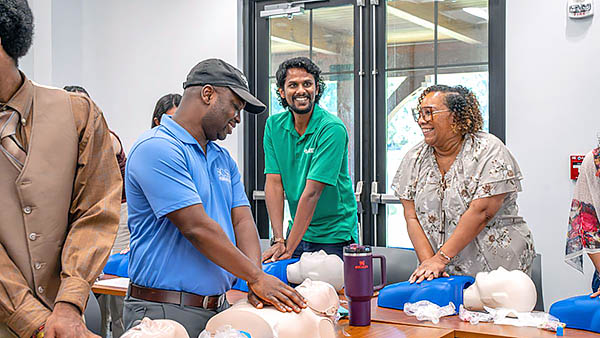
South Carolina State 1890 Research and Extension staff and summer interns strengthened their emergency response skills by completing CPR and Automated External Defibrillator training with the CPR ASAP Center before the start of the summer camp season. The hands-on training prepared staff to respond quickly and confidently to medical emergencies while serving young people across the state.
During the training, participants learned how to recognize cardiac and breathing emergencies, perform high-quality CPR, operate an AED and respond to choking incidents. Instructors emphasized the importance of taking immediate action and following emergency response procedures until medical professionals arrive.
As staff prepares to lead educational and recreational summer camp experiences, they carry the responsibility of creating a safe environment where young people can learn, explore and grow. This training equips camp leaders with critical lifesaving skills that support that mission.
"Nothing is more important than the safety and well-being of the young people entrusted to our care," said Dr. Demier Richardson-Sander, state 4-H program leader. "This CPR and AED training prepares our staff to respond confidently in an emergency, providing an added layer of protection and peace of mind for campers, families and our team throughout the summer."
By investing in emergency preparedness, SC State 1890 Research and Extension ensures staff enter the summer camp season ready to protect participants and respond effectively when every second counts. The training reinforces the organization's commitment to providing safe, engaging and enriching experiences for young people across the state.
Strengthening disaster preparedness
By Dr. Krystle J. Allen, Community and Economic Development Specialist at the SU Ag Center
Disasters often arrive with little warning, but their impact can last for months or even years. At the Southern University Agricultural Research and Extension Center, preparedness begins long before an emergency occurs. Cooperative Extension professionals' role extends beyond disaster response. They educate, empower and equip individuals, families, agricultural producers and communities with the knowledge and resources needed to prepare for, respond to and recover from emergencies. Building resilient communities is central to their mission across Louisiana.
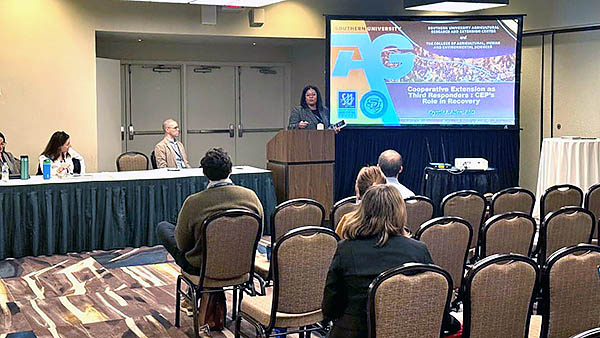
The SU Ag Center has developed research-based educational resources to strengthen disaster preparedness and resilience. These include Advancing Disaster Education: 1890 Research-Based Curricula, Lessons and Workshops, the JAGriculture fact sheets and Pack That Emergency Bag, which offer practical guidance for young people, families and communities. They have also shared this work through regional and national conferences with presentations such as Cooperative Extension as Third Responders: CEP’s Role in Recovery and JAGriculture: How to Add Capacity to Your Emergency Management Program. These efforts highlight how Cooperative Extension serves as a trusted partner before, during and after disasters.
Looking ahead, Dr. Krystle J. Allen, community and economic development specialist at the SU Ag Center, has partnered with Tulane and the University of Maryland, Baltimore County to engage in research on how disasters worsen food insecurity in rural Louisiana and how Extension can help address these challenges. Through partnerships with researchers and community stakeholders, they aim to strengthen local food systems, improve preparedness and increase access to nutritious food after emergencies.
Building healthier, more resilient communities
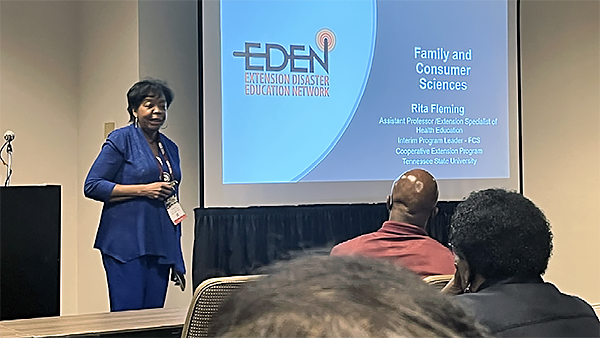
Emergencies can happen at any time, whether a natural disaster, a public health crisis or an unexpected life event. Being prepared can make a critical difference in how individuals and families respond and recover. Through Tennessee State University Cooperative Extension and its affiliation with the 1890 Extension Disaster Education Network Coalition, programs are committed to building community resilience through education and outreach.
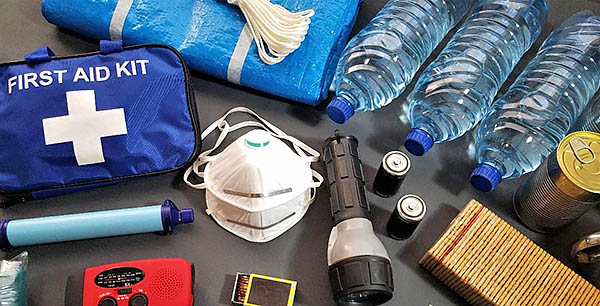
Tennessee State educates childcare centers, Extension agents, farmers and urban and rural communities on emergency preparedness by focusing on three key areas: planning, supplies and awareness. Participants learn how to create a household emergency plan that includes communication strategies, evacuation routes and meeting locations. We also emphasize assembling emergency kits with essentials such as water, non-perishable food, medications, flashlights and important documents.
Programs also address the needs of vulnerable populations, including older adults, children and individuals with chronic health conditions, who may be at greater risk during disasters. Education includes managing health needs and incorporating simple strategies to reduce stress and anxiety during emergencies.
Additionally, TSU promotes understanding of local hazards and encourages hands-on learning to help individuals practice preparedness behaviors before an emergency occurs. Preparing for the unexpected is not just about survival; it is about empowering individuals, strengthening families and building healthier, more resilient communities across Tennessee.
UAPB Small Farm Program conducts disaster education for farmers
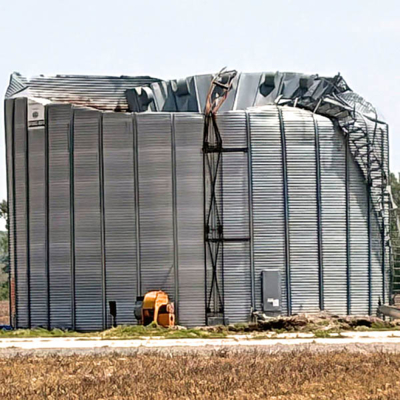
The Small Farm Program at the University of Arkansas at Pine Bluff recently started providing disaster preparedness education for farmers and ranchers. A workshop titled “Surviving Disasters Through Risk Management Preparation and Best Practices” was held in Forest City, Arkansas, in partnership with the East Arkansas Enterprise Community.
According to Dr. Henry English, director of the Small Farm Program, the objective of the workshop was to teach individuals how to conduct a disaster risk assessment of their personal situation, including identifying potential vulnerable risk hazards. These hazards may be natural (floods and droughts), biological (viruses and toxins) or man-made (chemical hazards or accidents).
“One common approach to risk management is to examine how risks affect the five major farm functions – production, marketing, finance, human resources and legal,” English said. “Based on the frequency and severity of the hazard, a range of risk-mitigation tools is available.”
The final portion of the workshop includes helping producers develop a disaster risk management plan for their operation. Producers are assisted in completing a risk assessment worksheet and action plan for their operation. The producer selects a hazard, identifies their specific vulnerability to it and then decides what needs to be changed or done to mitigate the risk. English said his program’s staff members currently assist producers in developing disaster risk management plans for their operations.
VSU Extension shares guidance for storm-ready trees
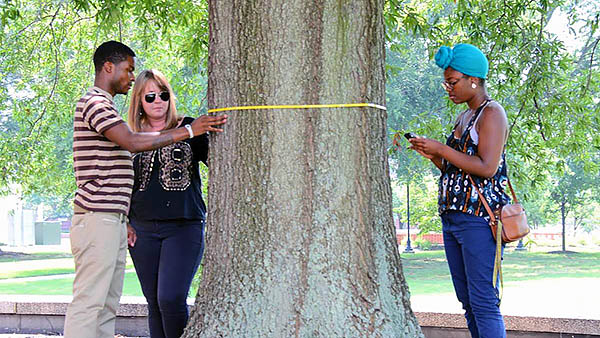
As Virginia enters peak summer storm season, Extension at Virginia State University is sharing information to help homeowners prepare for an often overlooked aspect of emergency readiness: tree health.
Urban Forestry Specialist Joel Koci shares tips about how proper tree selection, planting and maintenance can reduce the risk of storm damage. While healthy trees typically withstand normal weather, severe winds can cause failures, particularly when trees are poorly matched to their planting sites or have underlying health issues.
Koci encourages homeowners to choose trees suited to the available growing space, inspect existing trees regularly for dead or damaged limbs and signs of decline, and support healthy root systems by minimizing soil compaction and incorporating native plants into the landscape. He also recommends taking periodic photos of mature trees for insurance documentation and consulting an ISA Tree Risk Assessment Qualified arborist when tree health or structural stability is in question.
If an extreme weather event damages a tree, homeowners can take the following steps:
- Remain calm.
- Avoid downed power lines and damaged trees.
- Document property damage and file an insurance claim.
- Hire an insured professional for cleanup and repairs, and get a copy of their insurance certificate.
By connecting emergency preparedness with science-based tree care, VSU Extension is helping Virginians reduce risks before severe weather strikes. By preparing for the unexpected, residents can better protect their families, homes and landscapes.
WVSU Extension Service plans business resiliency hub to help businesses in times of disaster

West Virginia State University Extension Service is helping communities respond to disasters and provide spaces for economic resilience.
Plans are underway to develop the WVSU Economic Development Center — the university’s multifaceted facility that provides comprehensive business and entrepreneurship training, office space leasing and robust support for small business startups — into a business resiliency hub.
“Our objective is to create a space where local businesses can continue to operate during times of extreme weather,” said Renato Castillo, disaster preparedness and community resilience coordinator for WVSU Extension Service. “The proposed hub will have increased stability to withstand natural and manmade disasters by improving the structure of the building and implementing redundant power systems to ensure that local businesses may have a place of operations.”
The hub’s services would be free to the public and help take the burden off an already economically stressed area, Castillo said.
The WVSU EDC is located in Charleston, West Virginia, approximately eight miles from the university’s main campus.
Castillo is also working to establish a mobile disaster trailer that can provide satellite internet and free Wi-Fi for local residents in times of disaster.
“Due to the rural nature of our state and lack of developed broadband infrastructure, access to internet has become a necessity immediately after a disaster,” he said. “The access to internet allows for services such as medical telehealth visits when doctors may not be able to access rural communities, the ability to fill out government aid forms or simply messaging loved ones to let them know they are okay.”
Castillo is currently exploring funding opportunities to bring both projects to fruition.