
Extension Today
News from and about the 1890 Land-Grant Extension SystemMessage from the Chair

Dr. Raymon Shange, 1890 Extension Administrator, Tuskegee University
As a natural resources professional, I am pleased to introduce this month’s newsletter, focused on the timely and critically important theme, “Advancing Water Resilience for a Sustainable Future.”
Across our nation and globally, communities are grappling with increasing pressures on water resources, from extreme weather events to rising demand for agricultural, municipal and industrial use. Extension programs are uniquely positioned at the intersection of research, education and community engagement to address these challenges. Through science-based solutions, strategic partnerships and culturally responsive programming, we continue to equip individuals, producers and local leaders with the knowledge and tools needed to safeguard our water resources.
This issue highlights innovative approaches and collaborative efforts led by Extension professionals who are advancing water conservation, management and resilience in both rural and urban communities. From precision irrigation and watershed stewardship to community-based education and policy engagement, our collective work reflects a shared commitment to sustainability and long-term impact.
As we move forward, let us remain steadfast in our mission to strengthen the resilience of the communities we serve and ensure that future generations inherit not only access to clean and reliable water but also the capacity to protect and sustain it.
Rain barrel project improves water resilience in South Alabama
By Nikki Cobb
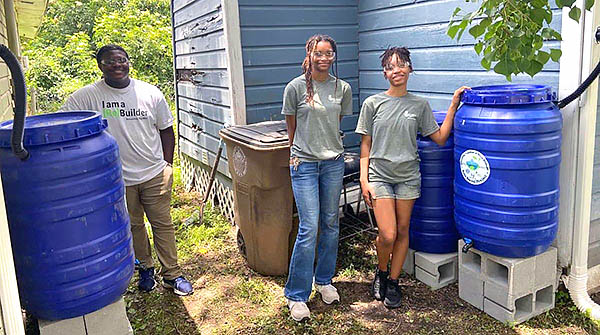
The Alabama Cooperative Extension System is partnering with Rebuilding Together of South Alabama in Mobile, Washington and Clarke counties to install rain barrels. Other project partners include the Bay Area Women’s Coalition, YouthWorks, Mobile County 4H, Mobile County Master Gardeners and county emergency management agencies. The underlying objective of the project is to understand the “experiences, perceptions and challenges of current and future water issues in South Alabama communities.”
South Alabama has its fair share of severe stormwater runoff and flooding due to flat land and a growing urban population. In addition, aging infrastructure increases runoff, leading to erosion and limiting local watersheds' ability to naturally absorb, filter and channel water. One way to help reduce water runoff is to install rain barrels.
This spring, Extension staff helped to install nine rain barrels in the Trinity Gardens community in Mobile, with more installations to come. Rain barrels help mitigate flooding from heavy storms. They also allow for water unfit for human consumption to be used for washing, cleaning, manual toilet flushing and putting out small fires, particularly in disaster-prone areas. In addition, rainwater is a natural alternative for watering lawns and gardens. Rainwater is superior to tap water for plants because it is naturally pure and free of harsh chemical treatments like chlorine and fluoride.
Alabama Extension helps residents take proactive steps to reduce flooding, conserve water and prepare for future disasters and environmental challenges.
Building knowledge for a more resilient Gulf Coast
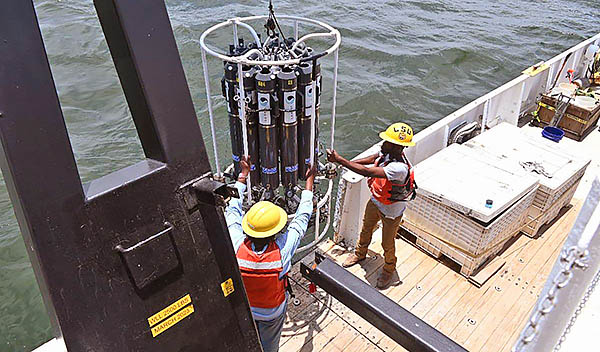
Water shapes the future of the Gulf Coast.
From coastal ecosystems and fisheries to agriculture, transportation and local economies, communities throughout the region depend on the health of the Mississippi River Delta and the water systems that sustain it. Understanding how those systems may change over time is critical to helping communities prepare for the future.
Through the Mississippi River Delta Transition Initiative (MissDelta), the Alcorn State University (ASU) College of Agriculture and Applied Sciences (CAAS) is contributing to a multi-institutional effort focused on understanding how changes in water and sediment movement could affect the Mississippi River Delta and the Gulf Coast region.
Monica Burr, Ed.D., lead co-principal investigator for ASU, serves on the initiative's Executive Committee, Knowledge Integration Team and Workforce Development Committee.
"One of the initiative's goals is to increase representation of underrepresented minorities in coastal, riverine and environmental science careers while encouraging more students to pursue graduate education in these fields," said Burr.
While researchers work to better understand future environmental conditions across the Delta, CAAS is helping prepare students to become part of the solution. Through field experiences, research opportunities and collaborations with partner institutions, students gain firsthand exposure to the environmental systems that influence water resources throughout the Gulf Coast.
Over the past three years, approximately 20 students have participated in experiences that introduced them to coastal and riverine ecosystems while building skills in research, communication and environmental problem-solving.
For CAAS, the project represents more than a research initiative. It is an investment in the people who will help communities navigate future challenges related to water resources, environmental change and coastal resilience.
Advancing water resilience for farmers: CSU Extension leads the way
For many small and urban farmers, access to reliable water remains a costly and persistent challenge. Limited infrastructure, unclear regulations and unpredictable weather can make irrigation difficult to secure and manage. These barriers are especially challenging for growers working on leased land or sites not designed for agriculture, where access to wells, hydrants and permits is often restricted.
As Andrzej Czarniecki, an agriculture and natural resources Extension educator at Central State University (CSU), explains, “Some of the biggest barriers include access to water, financial and infrastructure limitations, and knowledge barriers…but ultimately show an exponential loss of crop growth for these urban farms without these irrigation systems in place.”
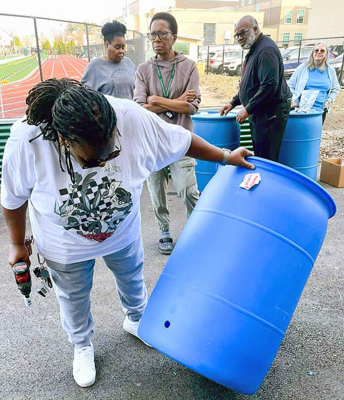
To help address these challenges, CSU Extension is providing practical, hands-on solutions. Through irrigation and water conservation workshops, more than 100 participants have learned cost-effective strategies for managing water on their farms.
“The two main things that we’re teaching are rain barrel installations and drip irrigation, but also automation and the importance of water management,” Czarniecki said.
Participants gain hands-on experience building systems and leave with resources they can use immediately. “People love it because it is a lot of hands-on and everybody gets to go home with their own rain barrel,” he added.
By teaching farmers how to source affordable materials, CSU Extension also reduces costs significantly. “If you’re resourceful, you can build a rain barrel system for under 60 bucks,” Czarniecki noted.
Beyond tools and techniques, participants gain confidence and problem-solving skills. As Czarniecki emphasized, “There’s always a solution to irrigation and figuring out how to get water to your plants.”
FAMU, UF partner to support rural well water safety
Dr. Katherine Milla and Linda Sapp
Florida A&M University (FAMU) and the University of Florida (UF) have joined forces to help improve well water safety in rural communities. Because private well owners are not covered by the routine testing and regulatory standards applied to municipal water systems, they may face increased risks related to water quality. This collaborative initiative aims to bridge that gap by providing testing services and practical support for homeowners.
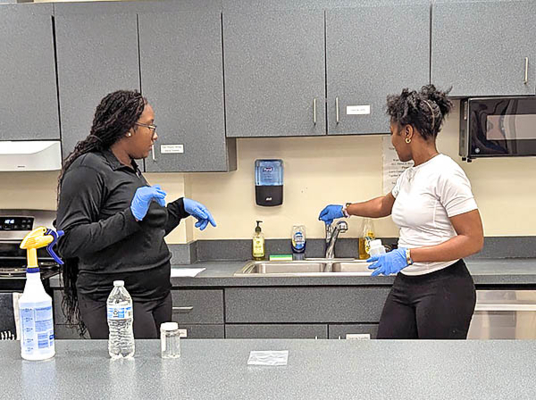
The project launched in seven rural communities in Jackson County, Florida, where more than 40 water samples have already been collected and analyzed. By the project’s completion, the team plans to assess 250 private wells for potential contaminants, such as bacteria, nitrates, lead and arsenic. Testing is being conducted in partnership with the Jackson County Department of Health, UF and the FAMU Center for Water Resources laboratory.
Beyond testing, the program emphasizes community engagement and education. A series of local meetings has been held to share information about well water safety and to coordinate sampling efforts. Community volunteers have played a vital role, receiving hands-on training in sample collection, helping assemble testing kits, organizing labeling systems and even collaborating on a training video to support future volunteers.
For wells where water quality concerns are identified, FAMU and UF staff are working directly with homeowners to explore remediation options and next steps. This hands-on approach ensures that participants are not only informed but also supported in improving their water safety. Community response has been overwhelmingly positive, highlighting both the importance and the impact of this initiative.
Rainfall boosts harvests in Twiggs County gardens
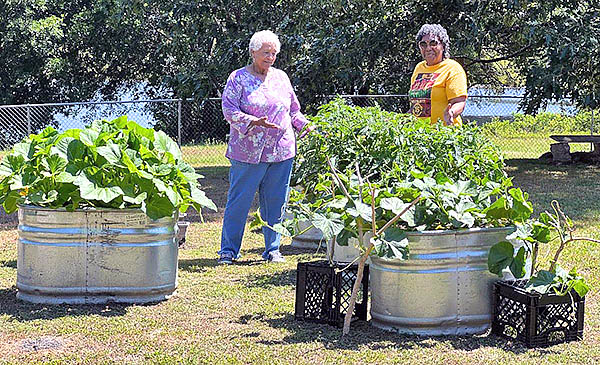
Terralon Chaney, Fort Valley State University (FVSU) Twiggs County Extension agent, said this spring’s gardening season was a resounding success, thanks to an abundant natural water source.
“We have bought water hoses and sprinklers, and they have not given us the results like rainwater,” Chaney said. “From planting to harvesting, we only had to water the Twiggs County Senior Center gardens twice this year. This project has experienced trials and tribulations over the years, but this season we have seen the highest yields because of the consistent rainfall.”
This past month, the local gardens harvested between 5 and 10 pounds of fresh vegetables each week.
“We planted several varieties of bell peppers, cucumbers, jalapeño peppers, squash and watermelons in raised beds,” Chaney said. “The steady rainfall was extremely rewarding, and we were able to compare this year’s results with previous years and see the difference consistent rainwater made.”
Twiggs County Commissioner Lonnie Ford and the city’s mayor also participated in the gardening initiative. Their tomato plants grew more than 6 feet tall, a result Chaney attributed in part to the season’s plentiful rainfall.
“The rainfall this season was extremely helpful,” Chaney said. “It strengthened our gardens as a health and wellness initiative, helping us eat better while increasing overall production.”
Advancing water resilience through aquaponics Extension
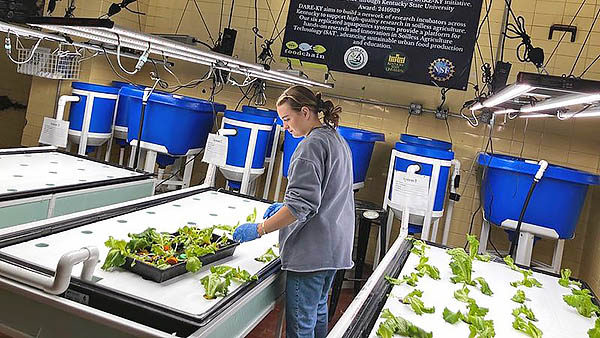
Fresh, affordable food and water resilience meet at FoodChain in Lexington, a nonprofit working to bring healthy food, education and hands-on training to communities that need better access to local food.
Kentucky State University’s relationship with FoodChain reaches back more than a decade. Janelle Hager, state specialist for aquaponics at Kentucky State’s Aquaculture Research Center, joined FoodChain’s Board in 2014, shortly after its aquaponics demonstration system was built. In 2019, Kentucky State partnered with FoodChain to install a marine shrimp aquaponic system, extending the university’s long-standing research and Extension work in aquaponics.
Today, FoodChain is a subaward partner in DARE-KY (Driving AgTech Research and Education in Kentucky), Kentucky State’s $7 million National Science Foundation-supported initiative focused on soilless agriculture, including hydroponics and aquaponics. As part of that work, Kentucky State has built replicated aquaponic research systems at FoodChain’s facility.
The systems serve as a research incubator for institutions without aquaponics research infrastructure and as an early access point for middle and high school students to engage in agricultural research.
“This is exactly how Extension supports the land-grant mission,” Hager said. “Through partnerships like FoodChain, we can translate aquaponics research into practical systems that communities, students and beginning farmers can see, learn from and use.”
As FoodChain expands with its Neighborhood Green Grocery, Kentucky State’s Extension partnership shows how water stewardship, food production and community access can grow together. Read more at From Fish Tanks to Food Systems, Herald-Leader story and DARE-KY statewide innovation network.
Advancing water resilience: Research, education, outreach for a sustainable future
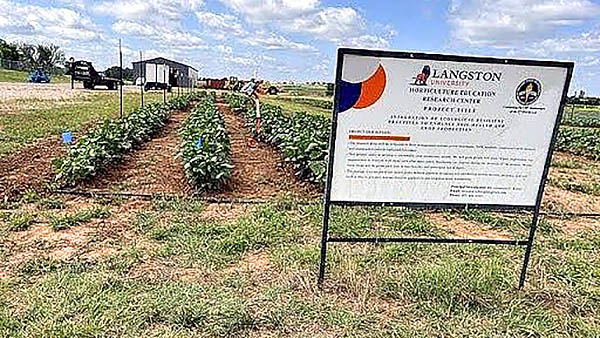
At the Langston University Horticulture Education and Research Center (HERC), advancing water resilience is central to its mission of promoting sustainable specialty crop production through ecologically sound agricultural practices. As weather variability continues to increase, conserving water while maintaining crop productivity is essential to the long-term sustainability of agricultural systems. Through applied research, demonstration projects and targeted producer education, HERC equips farmers with innovative practices that enhance water-use efficiency and improve overall soil health.
One of HERC’s primary strategies is the implementation of winter cover crops, including cereal rye, hairy vetch and radish mixtures. These crops protect the soil during the off-season, reduce erosion, increase organic matter and improve soil structure, enabling soils to absorb and retain more moisture while reducing runoff. In addition, HERC promotes plasticulture and drip irrigation technologies for specialty crop production. Plastic mulch minimizes evaporation and suppresses weeds, while drip irrigation delivers water directly to the root zone, reducing water loss and maximizing irrigation efficiency.
Through HERC FIELD DAY 2026, workshops, on-farm demonstrations and Extension programming across Oklahoma, HERC supports producers in adopting these conservation practices. The increased use of cover crops, plasticulture and drip irrigation is strengthening farm resilience, improving productivity and conserving valuable water resources.
“Water is one of our most critical agricultural resources and improving how we manage it is key to sustaining both productivity and environmental health,” said Dr. Leonard Kibet, director of Crops & Natural Resources at Langston University. “By integrating conservation practices such as cover cropping and precision irrigation, we are helping producers build resilient systems that can better withstand extreme weather events while protecting soil and water resources for future generations.”
Native plants help manage stormwater, protect water quality
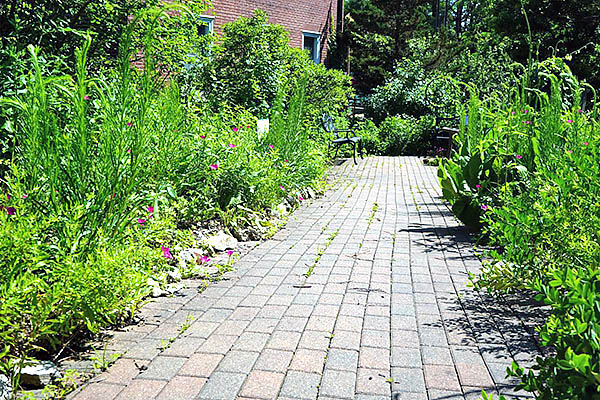
As communities look for practical ways to support water sustainability and resilience, Lincoln University’s (LU) Native and Specialty Crops Program demonstrates how native plants can help manage stormwater where it falls. Through rain gardens and other conservation practices, educators show how slowing water down can reduce runoff, protect soil and improve water quality.
“The key is to slow the movement of water through the landscape,” said Sue Bartelette, educator and landscape designer with LU’s Native and Specialty Crops Program. “The slower that water moves, the cleaner it will be when it reaches our aquifers.”
Native plants slow stormwater, helping more of it soak into the soil instead of running across the surface. As water moves through roots and soil, the landscape helps filter sediment and some pollutants before reaching nearby waterways.
At LU’s Native Plant Outdoor Laboratory near Allen Hall, home to Cooperative Extension, curb cuts direct parking lot runoff into native plantings, while permeable pavement allows water to move downward rather than across the surface. At the bottom of the site, a rain garden temporarily collects runoff and gives it a place to soak into the soil.
Together, these features show how native plants and conservation practices can turn everyday spaces into working examples of water sustainability and resilience by slowing water, improving infiltration and supporting cleaner waterways. The site gives visitors a close-up look at practices adaptable for homes, farms, businesses and community spaces.
Research gets below surface in quest to save water, grow better crops
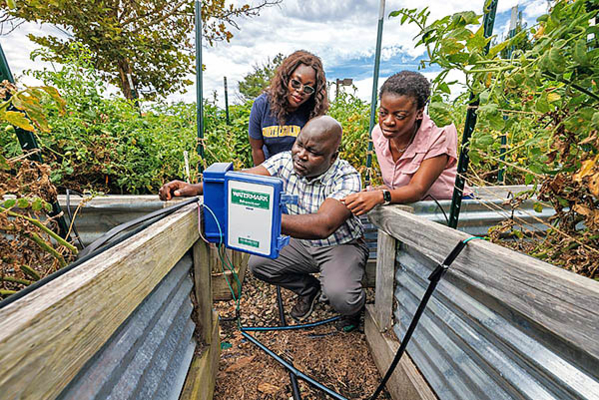
Blessing Masasi, Ph.D., knows water, but he is always trying to know it better — especially when it comes to learning how to manage it for agricultural uses.
As an assistant professor of biological engineering in North Carolina A&T’s College of Agriculture and Environmental Sciences, he aims to help farmers manage agricultural water use more efficiently as they adapt to extreme weather events, including deluges, droughts and rising temperatures.
Traditionally, irrigation scheduling decisions have relied on visual cues, such as looking for yellowing or wilting leaves. “But by the time you see a wilted plant, the crop is already under stress, which results in yield loss,” Masasi noted.
The research focuses on soil moisture sensors that delve below the surface to measure either the actual amount of water in the soil or its “matric potential” (the resistance to water uptake by plant roots in the soil). These sensors were installed in raised tomato beds on campus.
“We’re comparing three treatments: watering when the soil is just starting to dry out, letting it get drier and the traditional method of watering based on what the plant looks like,” Masasi explained.
“Last year, we saw that watering every day led to taller tomato plants,” said Olabisi Somefun, a Ph.D. student assisting with the research. “But interestingly, that didn’t translate into higher yields — the number and size of tomatoes were about the same, even if we watered less often. That means there’s a real opportunity to save water without significant yield reduction.”
Empowering landowners through water quality screening, education in Starr County
By Joseph R. Ozuna, Starr County AgNR Extension Agent
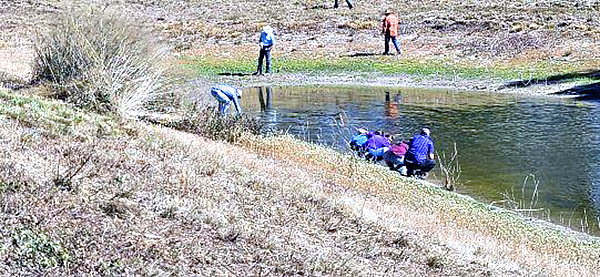
Prairie View A&M University (PVAMU) Extension, through its Agriculture and Natural Resources (AgNR) Unit, partnered with Texas A&M AgriLife Extension Service and private water well owners and local stakeholders in Starr County to conduct a comprehensive water quality screening initiative aimed at protecting public health, livestock production and agricultural sustainability. Led by County Extension Agents Omar Montemayor and Joseph R. Ozuna, the project focused on evaluating groundwater and surface water sources for the presence of fecal coliform bacteria, nitrate-nitrogen, arsenic and salinity.
They collected and screened 42 water samples from private water wells, livestock tanks and ponds. The program provided landowners with valuable information regarding potential contaminants that could impact human health, livestock performance and irrigation suitability. Laboratory screenings revealed that 51% of the samples contained fecal coliform bacteria, indicating possible contamination from septic systems, livestock waste or other environmental sources.
Additionally, the average nitrate concentration was 14 ppm, exceeding the U.S. Environmental Protection Agency's recommended drinking water threshold of 10 ppm in many samples. Arsenic was detected in 25 samples, while salinity levels averaged 1,226 ppm, highlighting concerns for both drinking water and agricultural use.
Based on this information, PVAMU Extension is educating participants on water quality risks, interpreting results and increasing awareness of best management practices to reduce contamination and improve water resource stewardship. Through this outreach effort, they empowered landowners with science-based information to make informed decisions regarding water treatment, livestock management, irrigation practices and long-term environmental sustainability, while strengthening community capacity to address critical water quality issues in South Texas.
Low Country Extension region hosts pond management workshop
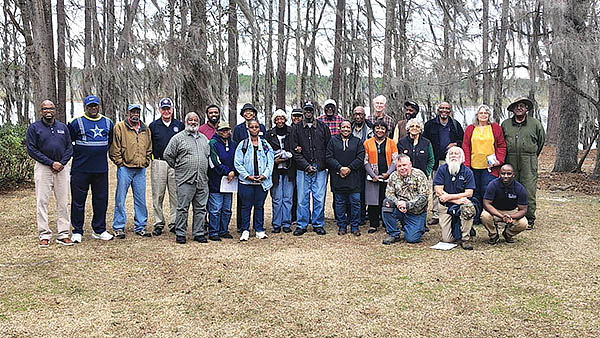
The 1890 Extension Low Country region hosted a pond management workshop at Lake Warren State Park with support from Clemson Extension. Designed for producers, landowners and pond managers, the workshop provided practical knowledge for those managing recreational ponds or commercial aquaculture operations.
Participants explored key aspects of pond management, including pond construction, maintenance and renovation; water quality assessment and mud bottom sampling; aquatic weed and algae identification; aquatic plant prevention and management strategies; and fish stocking recommendations. Educational sessions were provided by subject matter experts from Clemson Extension and Clemson University.
"Healthy ponds are valuable resources for producers, whether they are used for recreation, livestock, irrigation or aquaculture," said Daniel Lumoka, Low Country region ag agent. "This workshop provided science-based information they can use to improve water quality, enhance pond productivity and strengthen their operations' sustainability.”
Through expert instruction and hands-on learning opportunities, attendees gained knowledge to make informed management decisions, improve water quality, enhance aquatic ecosystems and increase the long-term productivity of their ponds. The workshop highlighted the importance of water stewardship and equipped producers with tools and resources to build more resilient water systems for the future.
Growing resilience one drop at a time: Sustainable garden practices at Southern University Ag Center
By Cornelius Jackson, Agricultural Extension Agent at the Southern University Ag Center
Water resilience is becoming increasingly important as communities face challenges associated with extreme weather events and growing demands on water resources.
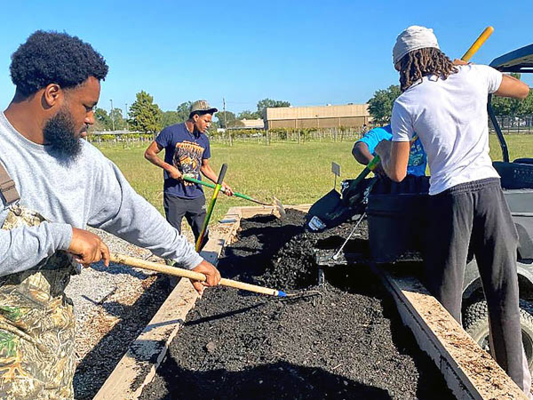
At the Southern University Ag Center, sustainable gardening practices implemented within the on-campus Demonstration Garden demonstrate how water conservation and environmental stewardship can be integrated into food production systems. This garden provides educational opportunities for students, researchers and community members while showcasing strategies that support agricultural sustainability.
One of the primary water conservation techniques utilized is drip irrigation. This system delivers water directly to the root zone of plants through a network of tubing and emitters, minimizing water loss through evaporation, runoff and overspray. By applying water more efficiently, drip irrigation helps maintain healthy plant growth while significantly reducing overall water use compared to traditional irrigation methods.
The Southern University Ag Center also promotes the use of compost applications to improve soil health and water retention. Compost increases organic matter in the soil, enhancing its ability to absorb and store moisture for longer periods. As a result, plants require less frequent watering and are better equipped to withstand drought conditions. Compost also improves nutrient availability and supports beneficial soil microorganisms.
Additionally, the Demonstration Garden incorporates drought-tolerant plant selections such as “Hibiscus sabdariffa,” which can thrive under reduced water conditions. Together, these practices demonstrate the Southern University Ag Center’s commitment to advancing water resilience, promoting sustainable agriculture and providing practical solutions that can be adopted by growers and communities throughout Louisiana and beyond.
Technology enhances water resilience
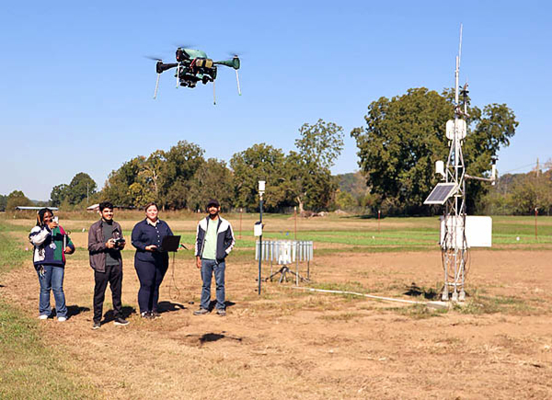
Water resilience is becoming increasingly important in Tennessee as agriculture faces growing challenges from climate variability and changing rainfall patterns during the growing season.
The Precision and Automated Irrigation Systems Engineering (PAISE) Program at Tennessee State University (TSU), directed by Dr. Behnaz Molaei, contributes to water resilience through innovative research focused on IoT-based soil–plant–atmosphere sensing technologies, unmanned aerial systems (UAS) and satellite-based imagery. The program develops and adapts soil water balance and energy balance models to generate actionable information that helps growers apply the right amount of water at the right place and time.
These technologies improve irrigation scheduling, increase water-use efficiency and strengthen producers’ ability to adapt to changing environmental conditions. A key PAISE research initiative involves evaluating high-resolution UAS- and satellite-based evapotranspiration mapping with internalized calibration under Tennessee’s hot and humid climate. This work is being conducted in irrigated soybean and corn fields, as well as rainfed winter canola production systems, to improve crop water-use assessment and irrigation decision-making.
In addition to research, the PAISE Program enhances water resilience through Extension and workforce development activities. Over the past three years, Molaei has organized and delivered several in-service training courses across Tennessee, reaching more than 150 agriculture and natural resources Extension agents from the University of Tennessee and TSU. In addition, she has served as an invited speaker at field days, producer meetings and local conferences, providing educational presentations and hands-on training to more than 700 producers, stakeholders and agricultural professionals.
Tuskegee has legacy of sustaining water quality
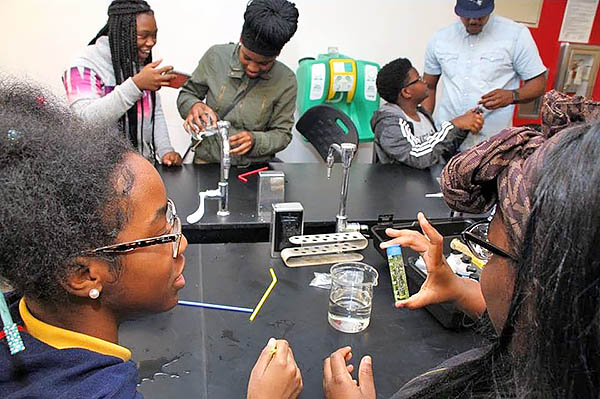
The Water Quality Program at Tuskegee University is rooted in the institution’s historic land-grant mission of research, education and community engagement, particularly through the Tuskegee University Cooperative Extension Program (TUCEP).
Since its founding as an 1890 Land-grant University, Tuskegee has emphasized practical, science-based solutions to improve the quality of life for limited-resource rural communities, including environmental stewardship and natural resource management. Within this broader framework, water quality education and research emerged as a key priority, especially in the Alabama Black Belt, where communities face persistent challenges related to safe drinking water, agricultural water use and environmental health. Through Extension programming and research centers such as the Carver Integrative Sustainability Center, the university has advanced a holistic approach to water systems that links agriculture, climate, policy and community well-being in alignment with the legacy of George Washington Carver and the institution’s commitment to applied science.
Over time, Tuskegee University’s Water Quality Program has evolved into a multidisciplinary effort combining community outreach, workforce development and applied research. Extension initiatives have incorporated water quality education into youth development programs and farmer training, building awareness of safe water practices among the next generation and small-scale producers.
In recent years, the university has strengthened its research and national impact through participation in major collaborative efforts such as the NOAA-supported Cooperative Institute for Research to Operations in Hydrology (CIROH), which focuses on improving water resource prediction, decision support tools and resilience to water-related hazards. These efforts reflect key accomplishments: expanding capacity for water research, integrating data-driven tools into Extension programming and contributing to regional and national strategies for water management.
UAPB continues technology advancements at Lonoke Farm through conservation partnership
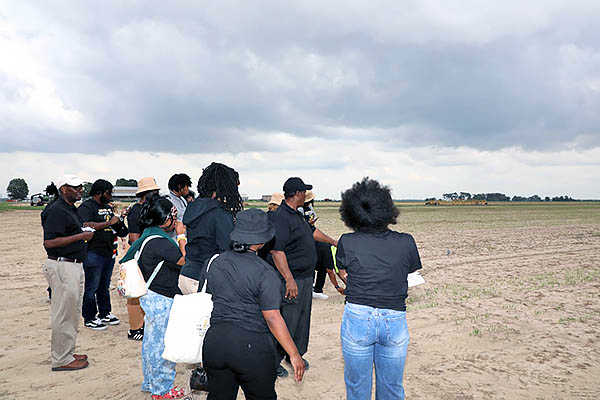
One year after signing a memorandum of understanding focused on conservation and agricultural innovation, the University of Arkansas at Pine Bluff (UAPB) is making progress on improvements at the Pearlie S. Reed/Robert L. Cole Small Farm Outreach Wetlands and Water Management Center at the UAPB Lonoke Farm, according to Dr. Obadiah Njue, assistant dean for Extension and outreach.
The partnership between UAPB, the National Black Growers Council and Ducks Unlimited was established to improve drainage systems, recover agricultural runoff and identify new methods to conserve water. Located approximately three miles north of Lonoke, Arkansas, the 889-acre farm serves as a teaching, research and demonstration site for students, faculty and producers throughout the state.
Assessments conducted by Ducks Unlimited staff and UAPB farm leadership identified irrigation water supply, water management and equipment upgrades as key priorities. “Once implemented, these upgrades will help us improve our irrigation water use efficiency at the Lonoke farm,” Njue said.
Planned improvements include converting wells and relift pumps to electric, cleaning and regrading canals, expanding underground pipe systems, implementing precision land leveling, constructing tailwater recovery ditches, repairing reservoir levees and installing telemetry systems and a weather station for real-time monitoring.
Julius Handcock, Lonoke Farm manager, said the upgrades will strengthen conservation efforts while creating educational opportunities for students studying agriculture, water management and environmental sustainability.
“At present, there is no set timeline as we work to increase efficiency at the UAPB Lonoke Farm; improvements will continue as funding becomes available,” Jessica Whitaker, representative for Ducks Unlimited, said.
From floods to droughts, farmers share weather challenges
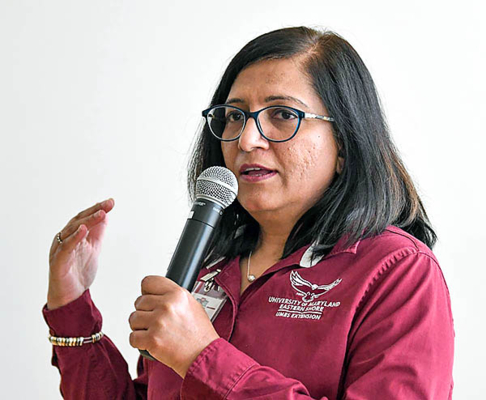
University of Maryland Eastern Shore (UMES) Extension is helping its neighboring families and farmers build for the long term in coastal areas against weather-related challenges that could impact their future. Through the Community Agricultural Resilience through Extension (CARE) project, universities, nonprofits and local government partners are collaborating to prepare for and mitigate the effects of floods, droughts, saltwater intrusion and other issues resulting from extreme temperatures and weather.
Virginia Tech, the grant awardee and project lead, is partnering with UMES and sister land-grant universities, including the University of Delaware and Virginia State. Each will conduct regional activities to help Extension educators and related groups create strategic plans for building capacity to address these issues in agricultural regions in their respective states.
The CARE project is funded by a $1.9 million investment in high-impact projects through the NOAA Climate Resilience Regional Challenge.
“UMES Extension, like our partners, will create needs assessments by holding a series of listening sessions to see what difficulties are being experienced in its service area and explore ways to improve farmers’ resiliency,” said Nazia Arbab, assistant professor and agribusiness resource economics specialist with UMES Extension and principal investigator for UMES’ subaward on the project.
She said some of the information to be gleaned is the difficulties being experienced that could be attributed to extreme weather. Practical steps toward realistic solutions will be formulated to assist farmers, landowners and their neighbors in reducing risk.
“Contributing to this project will aid in the effort to ensure the prosperity of farming and the nation’s continued food supply,” Arbab said.
Harnessing nature’s stormwater management methods to increase Virginia’s water resilience
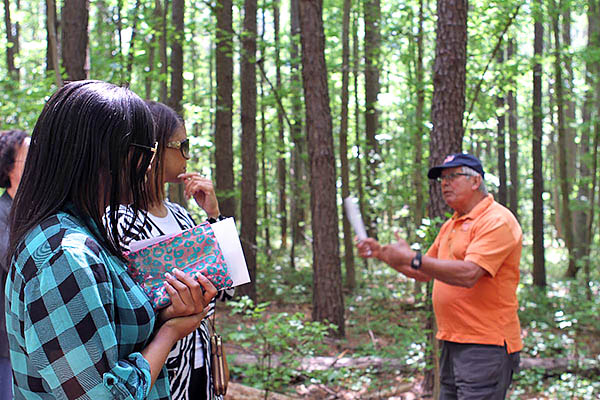
Large swaths of Virginia are a part of the Chesapeake Bay watershed, a vital economic, recreation and habitat resource. A healthy bay ecosystem protects air and water quality and protects communities from flooding and erosion. By protecting and increasing water resilience in Virginia, we protect our own communities.
At Virginia State University (VSU), Joel Koci, urban and community forestry Extension specialist, champions natural methods to bolster water resilience, such as riparian buffers. A riparian buffer is the area next to a body of water where native trees, shrubs and other plants grow. These buffers filter animal waste, pesticides and nutrients from farm runoff; stabilize riverbanks to prevent erosion; provide important habitat; and filter sediment and pollutants from stormwater runoff.
Koci’s educational outreach on riparian buffers focuses more on the urban environment, where smart forestry choices are as important as in farmland. VSU is just south of Richmond, Virginia, which sits along the James River. Here, Koci advocates for installing riparian buffers pre- and post-construction during urban and community development projects. In Richmond, heavy rain can cause sewage to seep into the James River.
“Riparian buffers can help with this problem, because they allow rainwater to slowly infiltrate into the soil and river instead of swiftly running into it,” Koci explains. When conducting outreach programs, Koci emphasizes the interconnectivity of humans and the environment. “If you toss a pebble in a pond, ripples dissipate,” he says. “But when you take a positive action for the environment, those ripples increase, magnify and amplify across other areas.”
Harvesting water, inspiring change
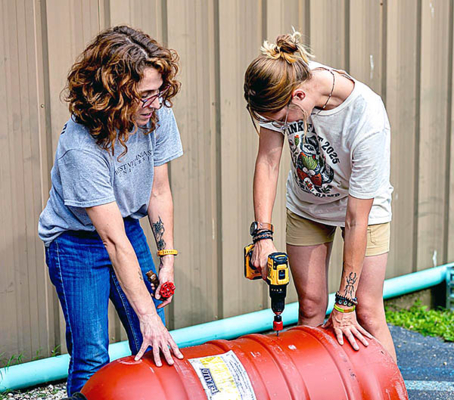
By Alisha Jarrett
Stormwater runoff is a persistent challenge in many West Virginia communities. When heavy rains overwhelm local infrastructure, flooding occurs and pollutants are washed into rivers and streams. Managing runoff not only protects the environment but also helps residents conserve water for everyday use.
With unpredictable weather and growing concerns about water conservation, it’s more important than ever to find simple, scalable solutions. Rain barrels — large containers for collecting and storing rainwater from rooftops — offer a practical way to reduce runoff and reuse water for gardening, flushing toilets and more. Yet, many people are unfamiliar with how to use these systems effectively.
Since 2021, Liz Moss, an Extension educator at West Virginia State University (WVSU) Extension Service, has led hands-on stormwater workshops throughout the region, including Kanawha, Cabell and Hamlin counties.
“Through these workshops, participants learn about the benefits of rainwater harvesting and receive the knowledge and tools needed to get started,” Moss said. “These efforts have resulted in over 200 rain barrels being distributed or sold to community members.”
If each barrel collects just one load of 55 gallons per year for three years, that adds up to an estimated 33,000 gallons of stormwater harvested and put to good use. Some residents even reserve this water for flushing toilets, demonstrating local creativity and dedication to sustainability. WVSU’s outreach empowers residents to turn rainfall into a valuable resource, one barrel at a time.
1890 communications team wins national awards
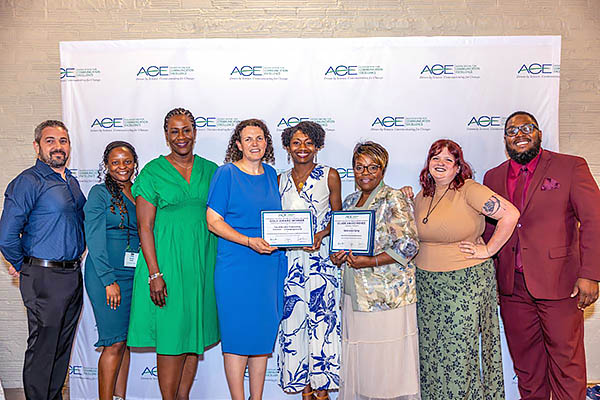
The 1890 Land-grant Communications Committee, comprised of agricultural communicators from the 19 1890 universities, received awards in the Critique and Awards Program at the 2026 Association for Communication ExcellenceConference in Billings, Montana, held June 15-17. The collaborative team earned a gold award in Publications for Diverse Audiences for the 2025 1890 Impact Report, “The 1890 Voice: Empowering Communities, Elevating Futures,” and a silver award in Newsletters for Extension Today. Latasha Everson of Fort Valley State University (2026-27 president) and Sonya Moore-Davis of Langston University (member services director) serve on the ACE Board of Directors. Moore-Davis and Amelia Davis of Florida A&M University will co-chair the 2027 ACE Conference.