
Extension Today
News from and about the 1890 Land-Grant Extension SystemMessage from the Chair

Dr. Raymon Shange, 1890 Extension Administrator, Tuskegee University
In the 1890 region, Cooperative Extension continues to lead transformative efforts in sustainable agriculture through organic farming, horticulture and aquaculture. These disciplines are not only enhancing food security and environmental stewardship but also creating new economic opportunities for small-scale producers and rural and urban communities.
This issue of Extension Today showcases how Extension professionals are integrating technical knowledge with cutting-edge programs to support resilient food systems that reflect the values and needs of the communities we serve. From organic demonstration plots and farm certification support to numerous aquaponics programs and training the next generation of horticultural experts, 1890 Extension programs are cultivating innovation across the agricultural landscape.
These educational initiatives are rooted in a commitment to equity, sustainability and community empowerment. This ensures that producers and families whom we assist both benefit from healthier ecosystems and secure food systems. As we highlight these efforts, we reaffirm our shared mission to advance agricultural excellence and environmental stewardship throughout the region.
A community garden grows hope
By Hayes Jackson
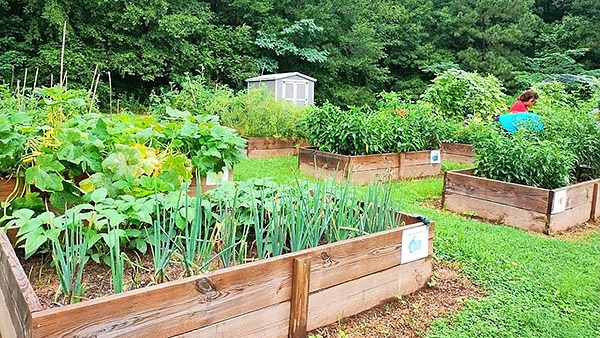
What began as a simple flyer initiative and a collaborative Alabama Extension project in Calhoun County, the Hobson City Community Garden has transformed into a community garden rooted in purpose and cooperation. It quickly became more than just a visual focal point — it became a place of nourishment and community.
Centering on community needs
The Hobson City Community Garden operates on the principle of sweat equity. That means that volunteers who tend the garden are welcome to share in the harvest. This model, combined with a no-cost policy, particularly supports seniors and homebound residents.
During the summer, the garden produced more than 625 pounds of fresh produce, benefiting 85 families. So far in 2025, 500 pounds of fresh produce have been distributed, benefiting 70 families. This is important since Hobson City has low-income, low-access areas. Additionally, volunteers have accrued 166 volunteer hours, and the fall harvest has yet to come.
The Hobson Community Garden also earned the Search for Excellence honor in a state-level Master Gardener Volunteer Service competition, standing out among gardens in Alabama’s 67 counties.
Looking to the future
Building on past accolades, the project was submitted for an international competition featuring entries from the United States, Canada and South Korea and will be featured in a documentary on Alabama Public Television. In addition, plans are underway to expand in-ground planting beyond raised bed gardening.
Today, the Hobson City Community Garden not only grows hope — it is an excellent model for other community gardens.
Graduate students’ intercropping research expected to boost Mississippi watermelon yields
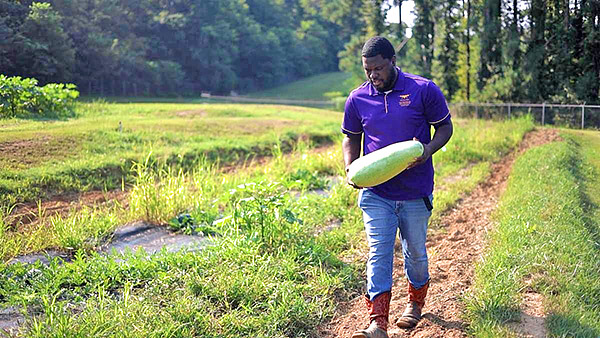
TreDarious Clifton, a graduate student and agronomy major from Yazoo City, Mississippi, is redefining the future of sustainable farming at Alcorn State University (ASU). What began as his graduate thesis project has evolved into a promising model for transforming pollinator management and crop productivity across southern agriculture.
Clifton’s study, “Intercropping Flowering Plants with Watermelons as a Habitat for Pollinators to Support Sustainable Crop Production,” explores how intercropping pollinator-friendly flowering plants with watermelons can enhance pollination, improve crop yield and promote long-term sustainability.
According to the U.S. Department of Agriculture, the decline of pollinators is caused by several factors, including pathogens, pesticides, climate stress, poor nutrition and habitat loss. More than 70% of the world’s flowering plants and two-thirds of the world’s crop species, including watermelons, depend upon pollinators to reproduce. The loss of pollinator habitat poses a serious threat to sustainable farming and global food security, making pollinator health a national research and Extension priority.
“My project brings awareness to small and local farmers on how important pollinators are to the environment and ecosystem,” Clifton said. “By creating habitats for pollinators, we can support sustainable crop production and help feed a growing population.”
Conducted at the ASU Model Farm and the Alcorn Experiment Station, the research included four watermelon varieties — Charleston Gray, Tendersweet, Sugar Baby and Jubilee — intercropped with sunflowers, zinnias, okra, borage and marigolds.
The objective was to evaluate the diversity of flowering plants intercropped with watermelons to attract a range of pollinators, including honeybees and native bees, thereby enhancing pollination, fruit development and yield.
Empowering farmers through hands-on high-tunnel workshop
By Michelle Wallace, Regional Agriculture & Natural Resources Extension Educator, Northwest Ohio
Small farmers can extend their season, increase their yields and improve their crop quality by installing a high tunnel.
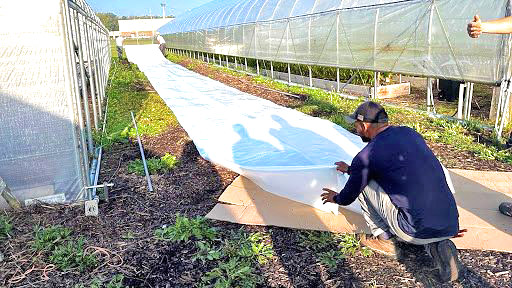
High tunnels are unheated greenhouse structures that use solar energy to retain warmth, allowing farmers to start growing crops earlier in the winter and spring, and to extend the harvest season into the fall. It is recommended to reskin a high tunnel every four to five years. Many farmers wait even longer because reskinning a high tunnel is expensive, and not everyone has the skills and comfort level to take on a big project like this on their own.
Many growers have taken advantage of the National Institute of Food and Agriculture Environmental Quality Incentives Program high tunnel grant to acquire a high tunnel. The North End Community Improvement Collaborative Urban Farm in Mansfield, Ohio, has 10 of these, and several were due for maintenance.
A family of vultures had taken up residence at the farm, damaging several tunnels while perching on top of the high tunnels waiting for meals. This created an opportunity for Central State University Extension to offer a hands-on workshop with help from Yoder’s Produce to introduce and empower growers in reskinning a high tunnel.
Participants now know what is needed to reskin a high tunnel, how long it takes, the materials needed and the estimated costs. Grower Cheryl Murray stated, “The workshop was very helpful,” and has set up a workshop in her region with volunteers and the help of Central State University Extension to hold another high tunnel reskinning workshop at her farm.
Delaware shellfish aquaculture: A new chapter for DSU
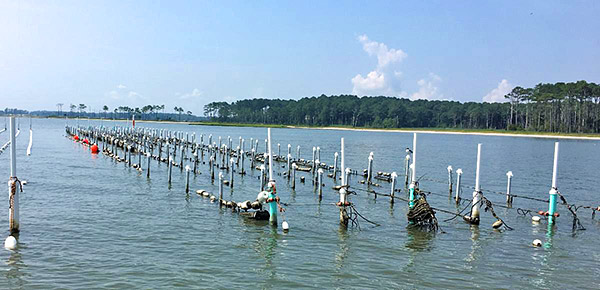
Aquaculture in Delaware is currently limited in terms of the number of commercial producers, with the industry historically being dominated by finfish production (e.g., tilapia, striped bass, hybrid striped bass). In 2013, then-Governor Jack Markell signed legislation to allow leasing of subaqueous lands in the DE Inland Bays for shellfish aquaculture. This represented a significant opportunity to expand DE’s aquaculture industry and posed a challenge, as there is a new/expanded demand for technical assistance, education and outreach.
The Delaware State University Aquaculture Technical Assistance and Outreach Program was developed in 2004 with a mission to foster the development of an aquaculture industry in DE. The program’s goals are to identify suitable aquaculture species for use in the mid-Atlantic region and to develop low-input methods to raise them profitably so that, as the industry grows, it remains economically and environmentally sustainable. Since its inception, this program has become a preeminent source of aquaculture information in DE.
The DSU Aquaculture Research and Demonstration Facility serves as a laboratory, classroom and demonstration farm site. With recent U.S. Department of Agriculture National Institute of Food and Agriculture Capacity Building Grant funding (2022-38821-37400 & 2024-38821-42127), DSU is expanding the reach and scope of its program to include a shellfish aquaculture demonstration farm in the DE Inland Bays. Once established, this will allow a space to conduct shellfish-focused Extension, teaching and research projects. Providing such a facility and unique learning opportunities will help potential shellfish farmers transition to proficient aquaculturists and lessen their economic uncertainty.
Sustainable aquaculture program at FAMU
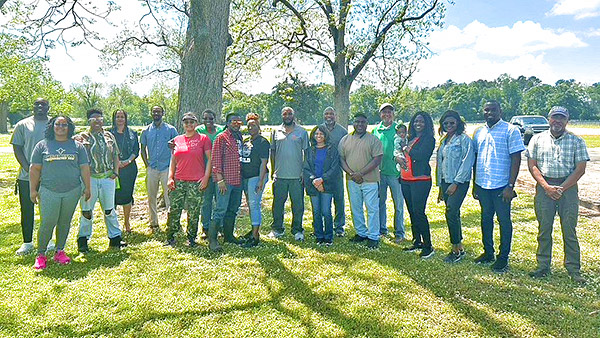
Aquaculture supplies 57% of the world’s fish production to meet the need for aquatic food and products. Florida Agricultural and Mechanical University has expanded its portfolio to include aquaculture research, teaching and Extension services, aiming to educate students, farmers and residents of Leon and Gadsden counties about sustainable fish farming. The program, which started with a recirculating system in the campus facility in Tallahassee, has expanded to include facilities at the Research and Extension farm in Quincy.
The facility supports research on freshwater finfish, including channel catfish, bluegill, Tilapia, hybrid striped bass and largemouth bass. The Florida Wildlife and Conservation Commission has supported the initiative. Through a joint effort with the Cooperative Extension unit, the first aquaculture workshop for beginning fish farmers in the Panhandle area was hosted at the FAMU Research and Extension Center in Quincy, sponsored by a grant from the Florida Department of Agriculture and Consumer Services.
The collaborative research project focused on increasing fish production for Floridians by utilizing alternative protein sources. More than 20 farmers were in attendance, with many of them new to the aquaculture industry. Recently, the University of Florida’s Streaming Science team facilitated a scientist-led online electronic field trip at the FAMU aquaculture facility in Tallahassee to promote STEM (science, technology, engineering and math) certification and careers in aquaculture and aquaponics among middle and high school students across Florida. Additionally, the Wakulla Environmental Institute has formed a partnership with the FAMU Aquaculture team to enhance the survival and reproductive performance of channel catfish broodstock.
Got a plant problem? Ask the good doctor!
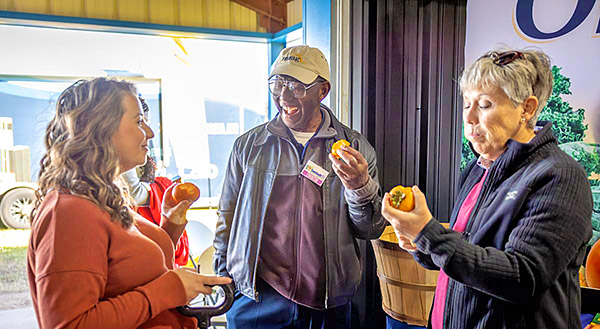
By Russell Boone Jr., Public Information Editor/Writer
Whether you’re a farmer, gardener or simply someone with a green thumb, Fort Valley State University’s Dr. James E. Brown is the go-to expert for plant and produce advice. A 1970 graduate of then Fort Valley State College with a degree in agronomy, Brown currently serves as a professor and interim program leader for FVSU’s Cooperative Extension Agriculture and Natural Resources (ANR) unit.
In his role, Brown works extensively with organic and chemical-free farming. He helps manage an 18-acre organic plot on the FVSU farm, where blueberries, muscadines and other fruits flourish. The farm also raises sheep, goats and cattle organically, offering a hands-on learning experience for students and visitors alike.
Originally from Dixie, Georgia, Brown is a U.S. Army veteran who retired with the rank of major. He is also an ordained Baptist minister, bringing a unique blend of discipline and compassion to his work.
When asked about teaching students interested in horticulture and agriculture, Brown says, “It’s very satisfying because they have a passion for it. I want them to master the purpose of the course and apply those principles in traditional and organic gardening.”
He also emphasizes the importance of Good Agricultural Practice (GAP) certification for small farmers. “It’s vital,” he explains, “because it helps prevent contamination and ensures food safety.”
What does he enjoy most? “I enjoy working with faculty and staff members here at Fort Valley State University. Most of all, I enjoy teaching students and imparting knowledge of agriculture to county agents, farmers and anyone interested in receiving knowledge relative to my area of responsibility.”
Aquaculture students rescue native fish after historic flooding in Frankfort
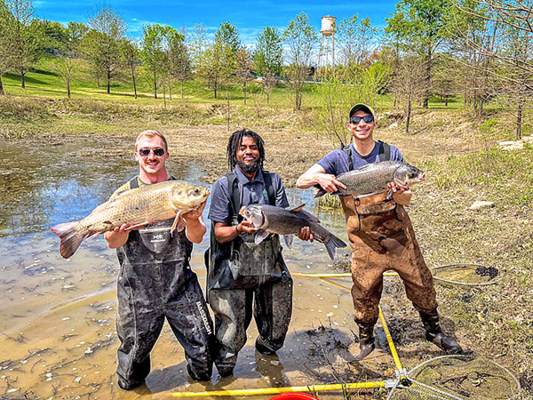
After historic April flooding in Frankfort, students from the School of Aquaculture and Aquatic Science within the College of Agriculture, Health and Natural Resources at Kentucky State University assisted at Buffalo Trace Distillery — the oldest continuously operating distillery in America and a National Historic Landmark — by seining an isolated flood basin and relocating more than 250 pounds of native fish across a dozen-plus species over two days.
Under faculty guidance, students documented species, monitored temperature and dissolved oxygen, staged fish in aerated holding tanks and returned them safely to the Kentucky River, turning an emergency response into applied training in field collection, water-quality management and community service. The story went viral across local, regional and national media, including Sports Illustrated, highlighting the university’s land-grant mission in action.
Dissemination of specialty crop production management system in Oklahoma
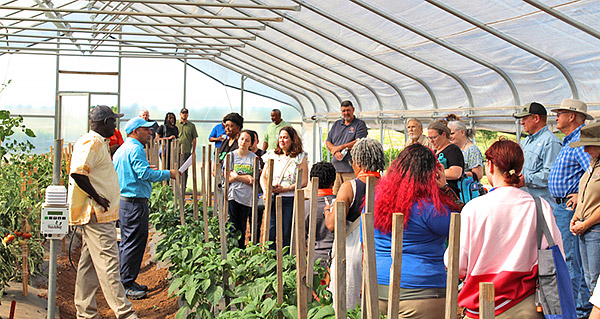
In June 2025, Langston University’s Sherman Lewis School of Agriculture and Applied Sciences held a field day at its Horticulture Education and Research Center to showcase innovative production technologies for specialty crop production. More than 60 producers from across Oklahoma attended this educational event to learn how to improve their current production practices and grow new specialty crops for market and home use.
Producers were taught the benefits of using high and micro tunnel systems. They also observed the results of a trial comparing the performance of different tomato cultivars, including slicer and cherry tomatoes, grown in these systems. High and micro tunnels are cost-effective ways to extend the growing season by trapping heat in the early spring, allowing for earlier seedling establishment and planting, leading to earlier harvest times and higher yields.
Scientists also demonstrated the production of three baby ginger varieties, Peruvian yellow, Vietnamese Buffalo and bird types, as a new crop that producers can grow for market. A high tunnel utilizing a shade cloth on the roof provided favorable growing conditions for the growth of ginger. In this high tunnel system, the ginger plants were planted in mid-May and will continue to grow until the middle of November for baby rhizome harvest. Both tomatoes and ginger are high-value crops that Oklahoma producers can grow and market to increase farm income and enhance farm sustainability.
The field day demonstration of specialty crops and production management was supported by funding from Southern Sustainable Agriculture Research and Education, Evans-Allen projects and the Extension Foundation.
Lincoln evaluates feed alternatives for aquaculture producers
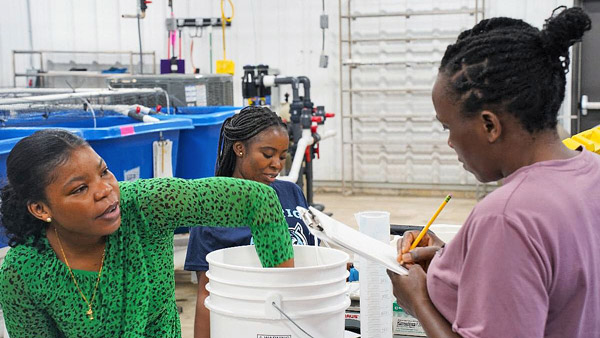
Lincoln University of Missouri’s Aquaculture Research team entered the final stretch of a 12-week research project this month, with only three weeks remaining until the project’s conclusion.
Dr. Moureen Matuha, an assistant professor of aquaculture, is supervising the project while graduate student Sadiat Onileowo runs it. Onileowo explained that the study is based on her thesis and seeks to evaluate alternative feeds for use in aquaculture production. Specifically, the study is testing soy-based products as partial and full replacements for traditional fishmeal in rainbow trout diets.
The choice to test soy-based products comes from a desire to support Missouri farmers, Matuha explained. The United States is the second-largest soybean producer in the world, and Missouri is among the top-producing states in the country. However, reduced exports have prompted researchers to find new ways to support soybean farmers.
On the aquaculture side, Matuha said producers want to increase production efficiency, fish health and product quality. By evaluating soy products as a fishmeal alternative, Lincoln is supporting both soybean farmers and aquaculture producers.
In pursuit of this goal, Matuha and Onileowo sourced rainbow trout from Crystal Lake Fisheries in Ava, Missouri, for a 12-week juvenile study. The study used soybean meal and Fermex200, a fermented soybean meal typically used as pig feed.
“We want to know how these feeds impact fertilization and fillet quality,” Matuha said. “What are their impacts on gut health, genes and protein metabolism? How do they affect water quality and production costs?”
Farmers glean tips on sustainable, organic practices on 'road trip'
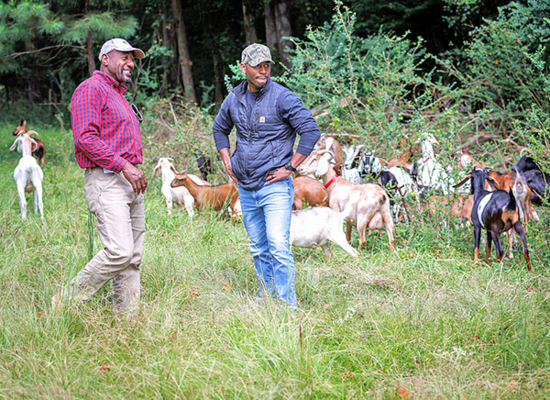
Ace Henderson of Fire Belly Farm in Charlotte wasn’t sure what to expect when he hopped on a bus with 20 other farmers to tour eight farms in two days.
“I’m very impressed,” said Henderson, who primarily grows peppers at his small urban farm. “There are a lot of resources that have been brought up for small-time farmers like me.”
The Sustainable and Organic Small Farms Bus Tour, affectionately known as the Farmers’ Road Trip, is organized by the N.C. Cooperative Extension and the College of Agriculture and Environmental Sciences at North Carolina Agricultural and Technical State University. Its mission is to expose farmers to successful small farm operations and promote sustainable and organic farming.
The tour, held Sept. 8-9, highlights successful small farmers who are innovative and demonstrate diverse production techniques, said Cyndi Knudson, area specialized Extension agent for small farms in northeast North Carolina.
John Gurganus, area specialized Extension agent for agricultural business and marketing in southeastern North Carolina, recruited different-sized farms with a variety of specialties, including fruits, vegetables, flowers and livestock, as well as ecotourism.
“I wanted to try to get as many different perspectives from our region as possible,” Gurganus said of the second annual tour, which was sponsored by the Southeast Transition to Organic Partnership Program and Southern Sustainable Agriculture Research & Education.
Assistant professor Hannah Talton, D.P.M., who specializes in plant pathology and integrated pest management, said the tour aims to encourage farmers to transition some of their conventional farm acreage into organic farming.
SC State PSA, BECT Institute lead hands-on hydroponics workshop
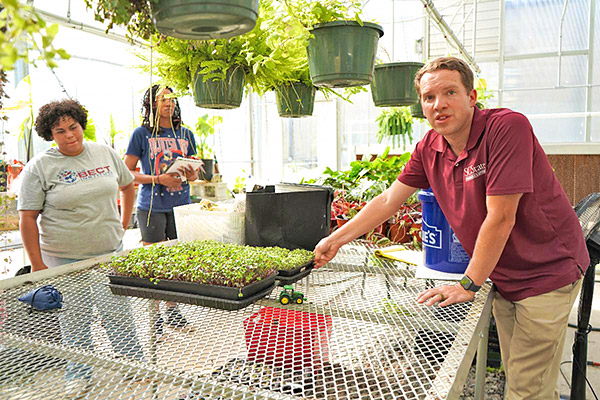
SC State University Public Service & Agriculture (SC State PSA) partnered with the BECT Institute Greenhouse to host a Hydroponic Basics workshop. The event was part of the institute’s new urban agriculture initiative, which focuses on community-driven growth and sustainability.
Led by Dr. Brandon Huber, environmental scientist and controlled environment expert at SC State PSA, the session introduced participants to the science and practice of hydroponics, a method of growing plants without soil, using nutrient-rich water solutions instead.
During the workshop, attendees explored various topics about the different types of hydroponic systems, nutrient and pH balance, algae prevention and how to mix nutrient solutions. Participants also toured SC State’s 1890 research laboratory to see how scientific research supports sustainable agricultural systems.
The BECT Institute Greenhouse provides an ideal environment for an immersive learning experience for both seasoned gardeners and newcomers to explore innovative, resource-efficient growing methods. The collaborative effort highlights how SC State PSA continues to advance agricultural innovation through research, education and community partnerships to help shape the future of sustainable urban farming.
Southern University Ag Center staff receive training at the Agri-Aquaculture Center of Excellence
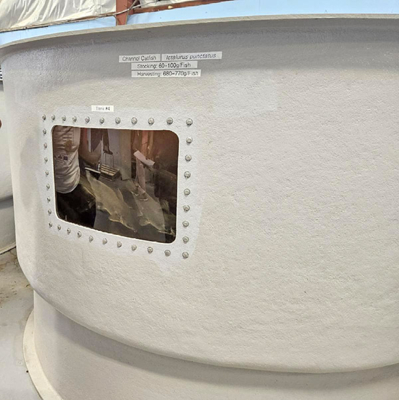
Several Southern University Ag Center staff members are receiving training from the Louisiana Chamber of Commerce Foundation’s Agri-Aquaculture Center of Excellence (AACE) in Harvey, Louisiana. AACE is a pioneering initiative that’s redefining sustainable agriculture in Louisiana. Established in 2024 with the support of Congressman Troy A. Carter Sr., AACE is the state’s largest closed-loop hydroponic aquaculture facility, combining education, workforce development and entrepreneurship to strengthen local food systems and create economic opportunities.
As a cohort participant in AACE’s 14-week Aquaculture and Hydroponics Training Program, Asha McIntyre, Fatemeh Malekian, Ph.D., and Gabriela Rodriguez, Ph.D., have gained hands-on experience in innovative, water-based farming systems that use 90% less water than traditional agriculture. The training has provided the staff with an opportunity to learn how to care for channel catfish, monitor water quality and cultivate lettuce in deep-water culture ponds.
“Witnessing how fish waste is naturally transformed into nutrient-rich water that feeds plants is a powerful reminder of how sustainability and science can work in harmony,” expressed McIntyre.
Beyond providing technical skills, AACE serves as a business incubator and workforce training hub for underemployed residents, farmers and small business owners by ensuring they have the resources, funding opportunities and mentorship needed to expand their operations.
At the conclusion of the training, the staff plans to use the knowledge they have gained to teach sustainable food systems to small, access-limited farmers and develop educational programs on sustainability and health to address food deserts and malnutrition.
Growing the future: Organic agriculture at TSU
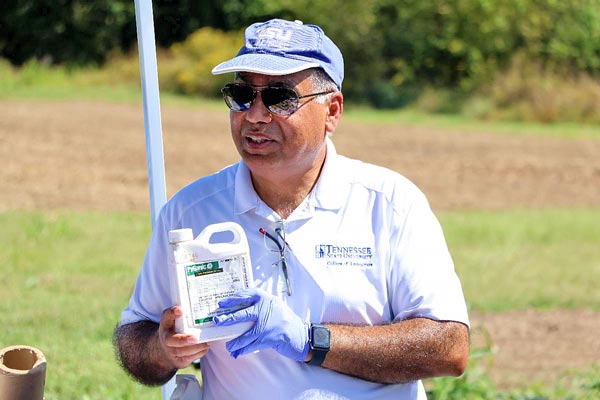
Organic farming is all about working with nature — protecting biodiversity, building healthy soils and creating balance across the ecosystem. Instead of relying on synthetic chemicals or genetically modified organisms, organic production uses crop rotations, cover crops, compost and natural pest control to keep farms productive and sustainable. These practices not only protect the environment but also improve soil quality and long-term farm health.
Since the Organic Foods Production Act of 1990 and the establishment of national standards in 2002, the U.S. organic industry has grown dramatically. In 2023, certified organic sales hit a record $69.7 billion, up 3.4% from the previous year — proof that consumers continue to invest in food grown responsibly.
Here at Tennessee State University, the College of Agriculture has been a leader in this field since 2014 through the Organic Agriculture Research, Extension and Education (OAREE) program. The program has reached more than 25,000 Tennesseans, secured more than $25 million in research funding and produced more than 250 publications that advance organic knowledge and best practices. Recent projects include variety trials, cover crops and innovative studies on biostimulants and natural pest management.
At the heart of this work is Dr. Dilip Nandwani, professor of organic agriculture. Since joining TSU in 2014, Nandwani has led dozens of projects in climate-smart farming, urban agriculture and vertical production systems — all aimed at helping farmers grow more sustainably. He has mentored graduate students, published more than 300 scholarly works and reached communities across Tennessee through workshops, field days and training events.
Experiential organic farming program at Tuskegee University
Organic farming has grown in popularity in the last two decades. According to the U.S. Department of Agriculture, in 2021, certified organic land had reached 4.89 million acres. Tuskegee University contributes to this total with its certified organic farm, where research and training are conducted. The university is also a recipient of funds allocated by the USDA for the Organic Agriculture Research and Extension Initiative.
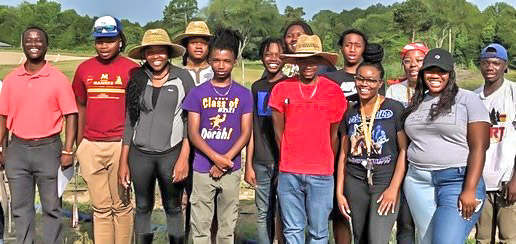
One way Tuskegee promotes organic farming is by hosting a Summer Experiential Program. The program focuses on expanding students' interest in organic agriculture. This past summer, the program hosted approximately 15 high school, undergraduate and graduate students.
“We are intentionally reaching out to students interested in organic agriculture and a possible career in sustainable food production," said Dr. Franklin Quarcoo, assistant director of Tuskegee University Extension. "Our goal is to actively engage future agricultural professionals from all walks of life.”
The hands-on program involves a multidisciplinary approach to organic farming. The curriculum provides a holistic perspective, covering policies and regulations, field preparation, weed control, agronomy, soil management, horticulture and pest management.
“We bring in professionals to lead informational sessions on these topics," continued Quarcoo. "Our own faculty members teach about food safety, post-harvest handling, marketing organic vegetables and food nutrition. Through this, students become not just informed consumers but also potential future producers.”
The students’ service-learning included working on a certified organic blueberry farm. This experience allows them to learn firsthand what is required to manage an organic farming operation. This experience prepares them for careers in the sustainable agriculture field.
UAPB expands APHIS-certified fish health inspection, diagnostic, research services for aquaculture industry
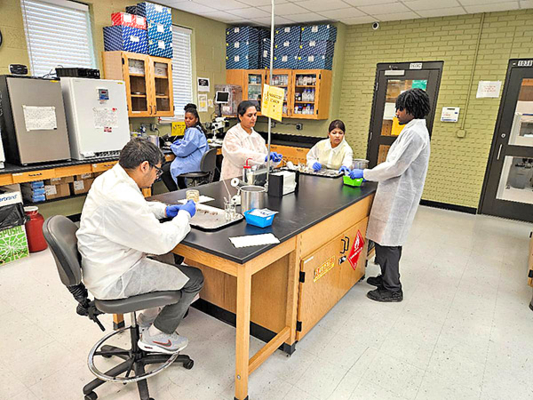
The University of Arkansas at Pine Bluff (UAPB) Aquaculture and Fisheries Department continues to advance the U.S. Department of Agriculture’s Animal and Plant Health Inspection Service (APHIS) certified fish health inspection services and disease diagnostics under the leadership of Dr. Grace Ramena, director of UAPB’s Fish Health Inspection and Diagnostic Program.
Members of the lab include Kailash Bohara, Extension specialist, Zachariah McGowan, Extension associate, and Dr. Betty Cheriyan and Annik Segree, research associates.
“The team plays a vital role in conducting fish health inspections and disease diagnostics for aquaculture stakeholders in Arkansas and nationwide,” Ramena said. “They ensure regulatory compliance with World Organization for Animal Health (WOAH) and USDA-APHIS standards.”
UAPB’s lab is APHIS certified to test WOAH reportable pathogens, viral hemorrhagic septicemia and spring viremia of carp virus, epizootic ulcerative syndrome, infectious hematopoietic necrosis, koi herpesvirus disease and megalocytivirus pagrus1, she said. This capability streamlines testing, reduces turnaround times and expedites fish certification for interstate and international movement.
“Our team is committed to advancing molecular diagnostics, expanding testing capabilities and conducting translational research funded by the National Institute of Food and Agriculture to support stakeholders,” Ramena said. “These efforts position UAPB as a regional leader in aquatic animal health, integrating research, field support and regulatory diagnostics. The department’s progress aligns with its mission to support sustainable aquaculture, safeguard aquatic animal health and strengthen the economic resilience of Arkansas and the U.S. aquaculture sector.”
Farmers find cut flower opportunity in dahlias
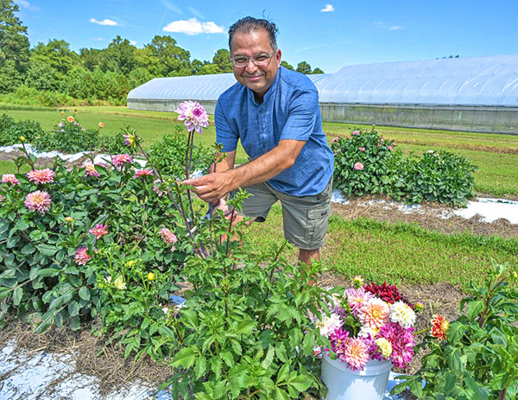
Brilliant rows of flowers are in bloom on the University of Maryland Eastern Shore farm. The sun shines, illuminating 39 varieties of perennial dahlias. Each has a personality of its own, from the large, 10-inch head of the Dinnerplate dahlia to the refined blush-colored bloom of the Café au Lait and everything in between.
Dahlias, along with subsequent studies of gladiolus and zinnias, are part of a three-year, grant-funded project on cut flower research and Extension activities to support growers across the Mid-Atlantic.
“Small-scale farmers can capitalize on growing these flowers as part of the farm-to-vase movement, marketing them through CSAs or agritourism opportunities, such as on-farm u-picks,” said Dr. Naveen Kumar Dixit, UMES Extension horticulturist and Extension specialist. “It’s a new take on the farm-to-table concept.”
The growing trend, he said, removes the middleman, increasing earning potential. “They have a short shelf life once cut, so they can’t be imported from their native countries,” Dixit said. “That’s why cultivating them here can provide opportunities for local growers.”
Dahlias are value-added, Dixit said. One tuber can fetch $15-$35. The more color, specifically pink, the higher the price they command. In every color except blue, there are more than 20,000 cultivated varieties and 42 species.
Planted in early June, they will be continuously harvested (cut) until the first frost. Since they are perennial, the tubers can be dug after the growing season, separated and stored for next year.
Dixit has displayed the fruits of his labor — more precisely, the blooms of his labor — at UMES’ Ag Showcase and Veterans Ag Conference.
Virginia State University transitions 10-acre field plot to organic field
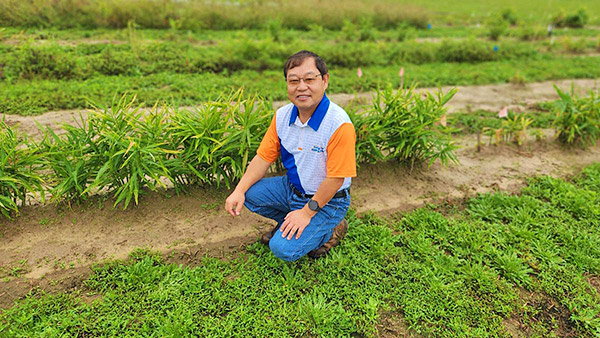
The Extension Horticulture Program at Virginia State University (VSU) was restructured following the departure of the previous specialists from their roles. The new team consists of Horticulture Specialist Dr. Sanjun Gu and Associate Specialists Joshua Dusci and Peter Coffey. At VSU’s Randolph Farm, the team has ongoing applied research projects focusing on high-value specialty crops like ginger, turmeric, garlic, edamame, salad greens and blueberries. Right now, the team is working to transition a 10-acre field plot on Randolph Farm to an organic field, which opens possibilities for future applied research projects in organic production.
“Organic agriculture is the fastest growing sector in U.S. agriculture,” says Gu. “It’s highly suitable for small farms and often yields higher profits.” The horticulture team primarily focuses on helping small-scale commercial growers, who look for ways to produce farm products profitably and sustainably. However, Virginia is only the top 23rd state for organic production in the United States, pointing to an opportunity for increased organic production to meet growing market demands.
Per National Organic Program rules, the field at Randolph Farm will be eligible for organic certification after a three-year transition. The field is two years into the process and is on track for certification in 2026 after a systematic review and on-site inspection. Once certified, the field will host organic tomato and other vegetable research and demonstration projects.
“Having our own organic field for research and Extension programs provides a great opportunity to better help our small farmers,” says Gu.
Buzzworthy blooms
By Alisha Jarrett
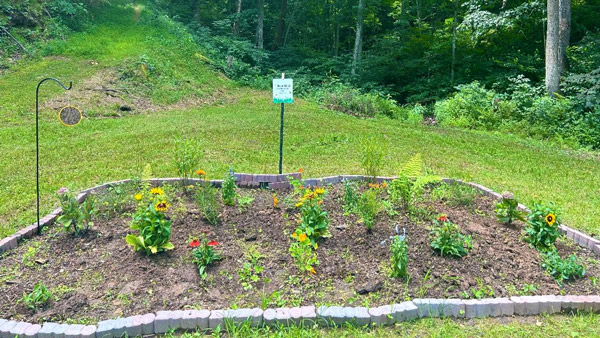
As a program assistant with West Virginia State University 4-H, Hailey Saxton recently led a community effort to establish a pollinator garden at Meeks Mountain Trails in Hurricane City Park. Collaborating with her family, fellow educators, local volunteers and the Meeks Mountain Trails Alliance, she brought her vision to life. Funding was provided by a grant focused on pollinator education and habitat preservation, which also enabled Saxton and 4-H Teen Ambassadors to attend the Ignite by 4-H conference in Washington, D.C., where they received valuable training and resources.
Drawing from her experience as a student ambassador, Saxton turned insights into action. She planted perennial wildflowers and native West Virginia plants — like coneflowers and milkweed — that support pollinators. To enrich the habitat, she added a butterfly puddler, mason bee house and bird feeder, ensuring the space would benefit many species.
After months of planting and care, the garden bloomed in June. Bees, beetles and butterflies now frequent the site, indicating an improvement in local biodiversity.
“This project educates young West Virginians about pollinators’ vital roles by engaging them in hands-on activities and providing resources to create their own habitats,” Saxton said. “By inspiring awareness and action, we are empowering the next generation to help protect pollinators crucial to our food supply.”
Recently, Saxton joined Bee Friendly Gardening, a Pollinator Partnership initiative, and received a lifetime membership and a garden sign. She remains dedicated to nurturing the garden, raising awareness and inspiring others to do the same.